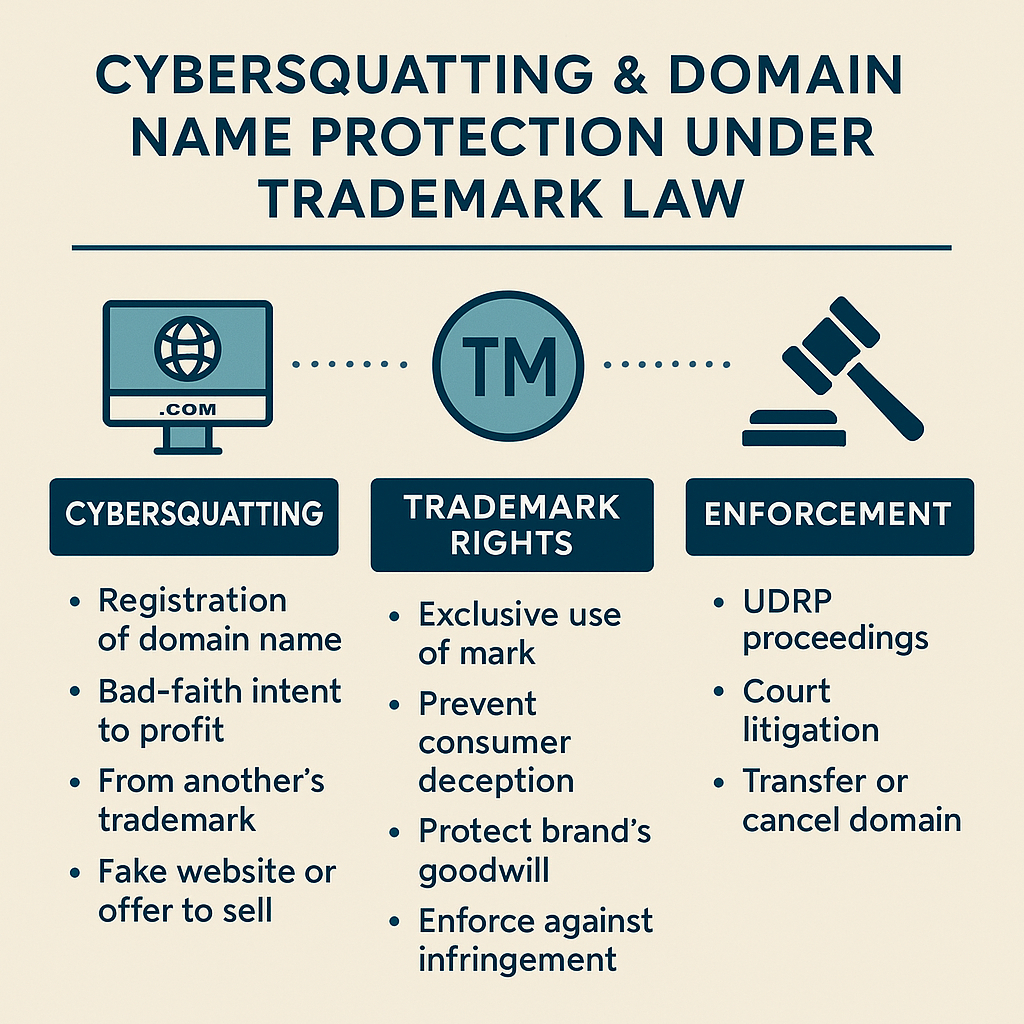
Where Brand Rights Meet the Digital Wild West
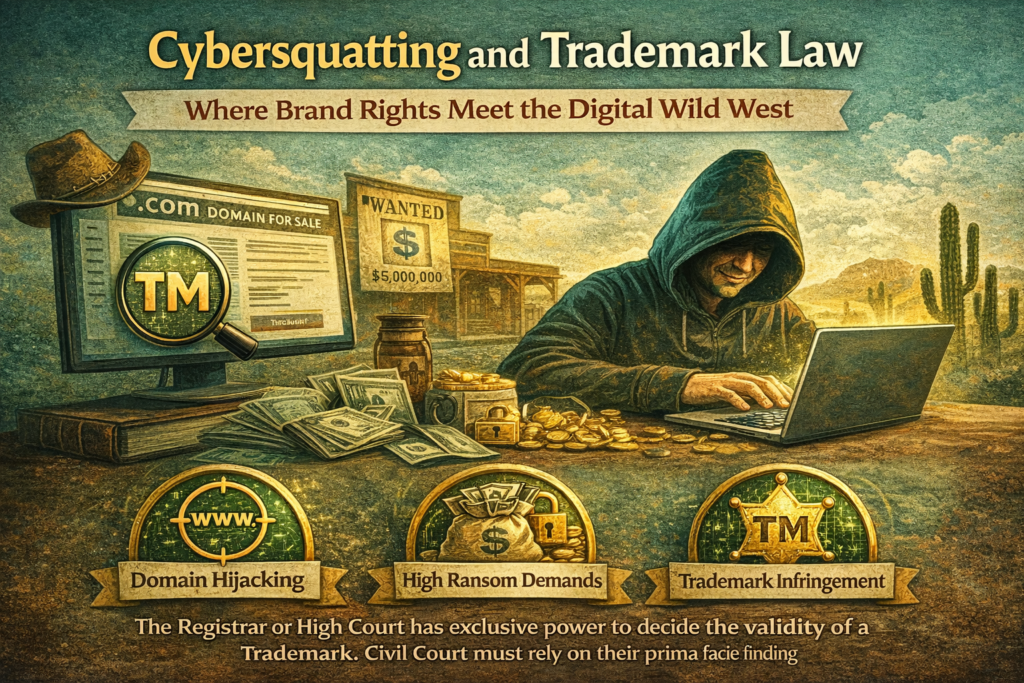
Introduction
The, adoption of a website and a domain name have become an important tool for brands to reach consumers. Similar to a trademark, websites and domain names also act as identifiers of a particular brand/ company or business. Websites became tools that complement business in the past, but at some point, with technological developments, domain names and websites are inevitable as consumers’ choice for a particular brand or business based on the online footprints.
In today’s digital economy, a domain name is often the first point of consumer interaction with a brand. As businesses increasingly rely on online presence, the practice of cybersquatting—registering domain names identical or deceptively similar to established trademarks—has emerged as a serious threat to brand owners.
Indian courts and international dispute resolution mechanisms now consistently recognize that domain names function as business identifiers, deserving protection under trademark law principles.
What Is Cybersquatting?
Cybersquatting is the act of registering, trafficking in, or using a domain name with the bad-faith intent to profit from the goodwill of someone else’s trademark.
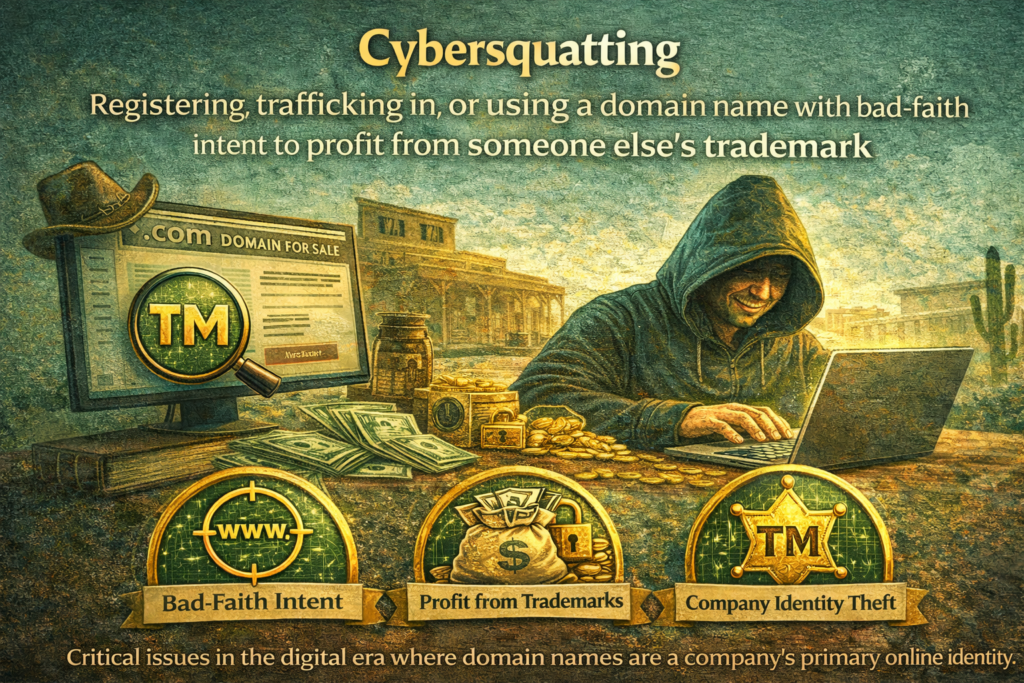
Cybersquatting and domain name protection are critical issues in trademark law, especially in the digital era where domain names often serve as a company’s primary online identity.
Complementary Role of domain name and Website:
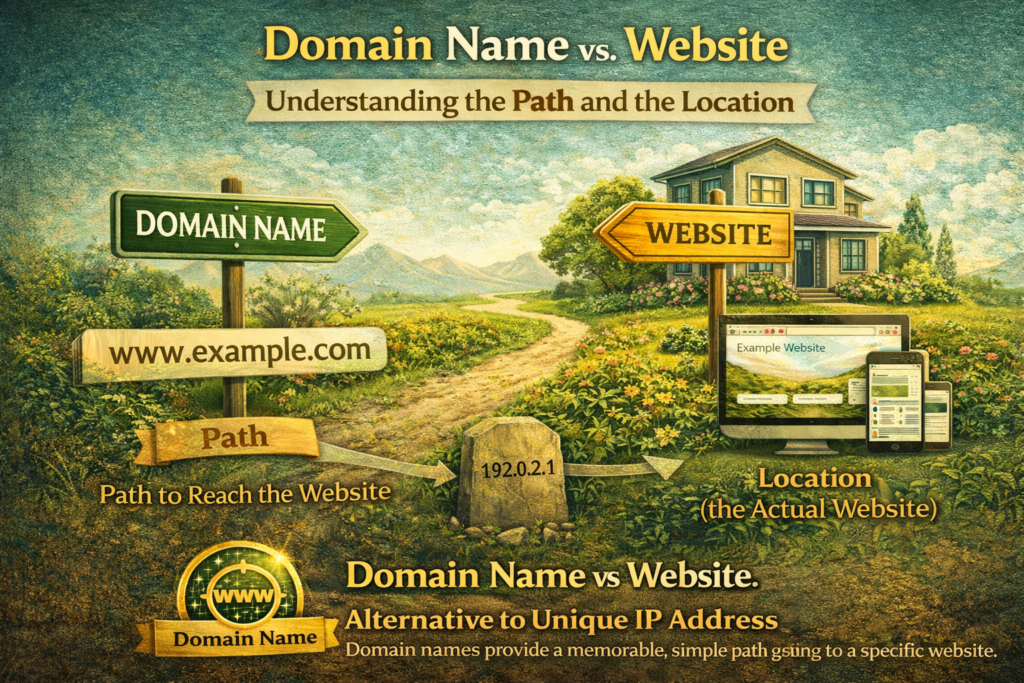
Domain name and website, these two go hand in hand, while many people do confuse these two terms, understanding the distinction is important. A domain name can be simply called as a path that leads a user to the website and a website is a platform which is developed and is the result that is displayed when one enters the particular domain name. For instance, the domain name shall be stated as the path to reach a particular location, whereas the website is the location itself. Now these websites once developed carry a unique IP address, which is complex and difficult to be remembered, for which domain names are used as an alternative.
Key role of, a cyber squatter will:
- Register domain names identical or confusingly similar to existing trademarks or brand names.
- Try to sell the domain to the trademark owner at an inflated price.
- Use the domain to mislead consumers, damage the brand, or divert web traffic.
The purpose of protection of an internet domain name can be viewed equal to the purpose of a trademark registration. The basic purposes behind protection of domain name includes:
- Protection and Promotion of brand name
- Better brand outreach, global outreach
- Supports expansion of business
- Exclusive right to use the particular name
- Helps in distinguishing a particular brand’s/ business’ goods and services
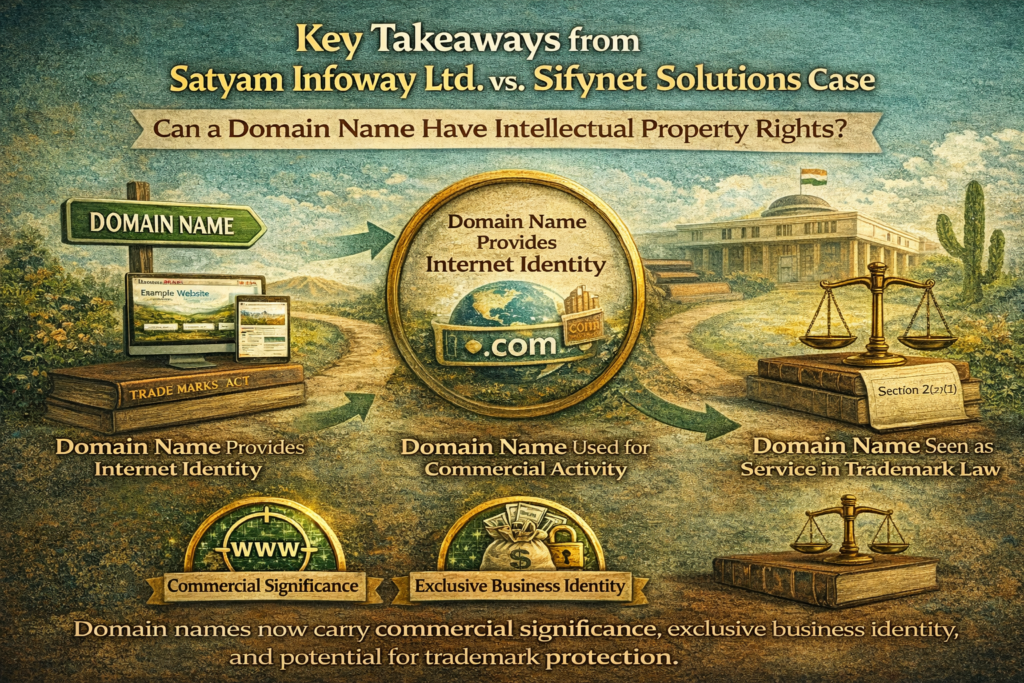
To understand the above mention aspects the case laws and rulings of the court acts as prism for convenient analysis is Satyam Infoway Ltd. v. Sifynet Solutions. The major issue in this case was whether a domain name can be considered as a word which is capable of differentiating the trade/service which is supplied to the users on the internet and does the same confer any Intellectual Property Rights?
In the opinion of the court the basic role of a domain name was to provide address for the computers on the internet and that the internet has changed since times, from being as a communication means, it has become a more of carrying a commercial activity and domain name is now used as an identity of a business. It was also mentioned that a domain name may be considered as services under Section 2(z)[ii] of the Trademarks Act and the domain name has become an exclusive identity and as time passes by, more and more activities (commercial) advertise or trade on the web, making the domain name more valuable. A domain name is not only used to facilitate the consumers but it also helps in the identification of the two different business activities.
Legal Framework in accordance with Trademark Law around globe :
Trademark law offers several mechanisms to combat cybersquatting and protect domain names:
1. The Anti-cybersquatting Consumer Protection Act (ACPA) — U.S.
Under the ACPA (15 U.S. Code § 1125(d)):
- Trademark owners can sue individuals who register domain names identical or confusingly similar to their marks in bad faith.
- Remedies include:
- Transfer or cancellation of the domain.
- Statutory damages ranging from $1,000 to $100,000 per domain name.
2. Uniform Domain-Name Dispute-Resolution Policy (UDRP) — International
Governed by ICANN, the UDRP allows trademark holders to file disputes against domain registrants.
To succeed, a complainant must prove:
- The domain name is identical or confusingly similar to a trademark.
- The domain owner has no legitimate rights or interests in the domain.
- The domain name was registered and is being used in bad faith.
If successful, the domain is transferred or cancelled — without the need for a full trial.
3. National Trademark Laws (e.g., India, EU, UK)
Many jurisdictions provide legal recourse for domain name disputes under their respective trademark or unfair competition laws. Courts consider:
- Trademark ownership.
- Domain use and intent.
- Likelihood of confusion or brand dilution.
Best Practices for Domain Name Protection
- Register your domain name early in all relevant TLDs (.com, .net, .org, country codes).
- Consider trademarking your domain name if it identifies your brand.
- Use brand monitoring services to watch for domain registrations similar to your trademark.
- Act promptly when cybersquatting is detected—early legal action can prevent further damage.A structured analysis of the impact of cybersquatting and domain name protection under trademark law on different stakeholders:
1. Brand Owners / Trademark Holders
Negative impact of cybersquatting: Loss of online traffic, dilution of brand goodwill, risk of consumer deception or phishing scams.
Positive impact of protection mechanisms: Trademark law (through UDRP, INDRP, and national courts) gives tools to recover domains, deter squatters, and safeguard brand reputation.
Costs involved: Legal fees, arbitration costs, and monitoring services increase business expenses.
2. Consumers / Internet Users
Negative impact: Cybersquatted domains may mislead consumers, expose them to fraud, malware, or counterfeit goods. Trust in legitimate brands can decline.
Positive impact of protection: Strong enforcement ensures consumers are directed to authentic websites, reducing confusion and ensuring quality/safety of goods and services.
3. Domain Name Registrants / Investors
Legitimate investors: Face risk of being wrongly accused of cybersquatting if domains resemble trademarks (reverse domain name hijacking).
Cyber squatters: Face cancellation or transfer of domains, financial penalties, and reputational damage under UDRP/INDRP or trademark litigation.
4. Regulatory Bodies / ICANN & Arbitration Forums
Role: Provide global dispute resolution (e.g., UDRP by WIPO, INDRP in India).
Impact: Greater responsibility to balance trademark rights vs free speech/fair use. Must ensure efficient, cost-effective, and impartial processes.
5. Legal & Policy Stakeholders
Law firms, IP attorneys, arbitration professionals: Increasing demand for domain name dispute resolution services.
Policymakers: Must update rules to address new challenges like gTLD expansion, internationalized domain names, and blockchain-based domains.
PRACTICAL LEARNINGS FOR BRAND OWNERS AND OTHER STAKEHOLDERS
Brand owners gain protection but face monitoring/enforcement costs.
Consumers benefit from reduced deception but suffer when cybersquatting succeeds.
Legitimate registrants risk overreach, while cybersquatters lose illicit gains.
Regulators and policymakers carry the burden of evolving fair, effective frameworks.
WHY THIS CASE IS IMPORTANT FOR IP STUDENTS AND PRACTITIONERS
For students preparing for Trademark Agent and Patent Agent Examinations, this case provides a practical demonstration of:
• Trademark infringement and passing off
• Judicial standards for ex‑parte injunctions
• Role of intermediaries in modern IP enforcement
For practitioners, the case reinforces that trademark litigation today requires legal strategy aligned with technology and speed.
KEY TAKEAWAYS • Digital trademark fraud invites swift judicial intervention
• Ex‑parte relief is achievable with credible and urgent evidence
• Consumer protection is central to trademark jurisprudence
• Intermediary cooperation is increasingly mandatory
• Delay significantly weakens enforcement
CONCLUSION:
The incidents of cybersquatting is a wake up call for brand owners to maintain consistency taking consumer trust to next level but it sends a clear signal to put checks on digital impersonators and brand abusers so that trademark law to evolve to match technological misuse.
Leave a Reply