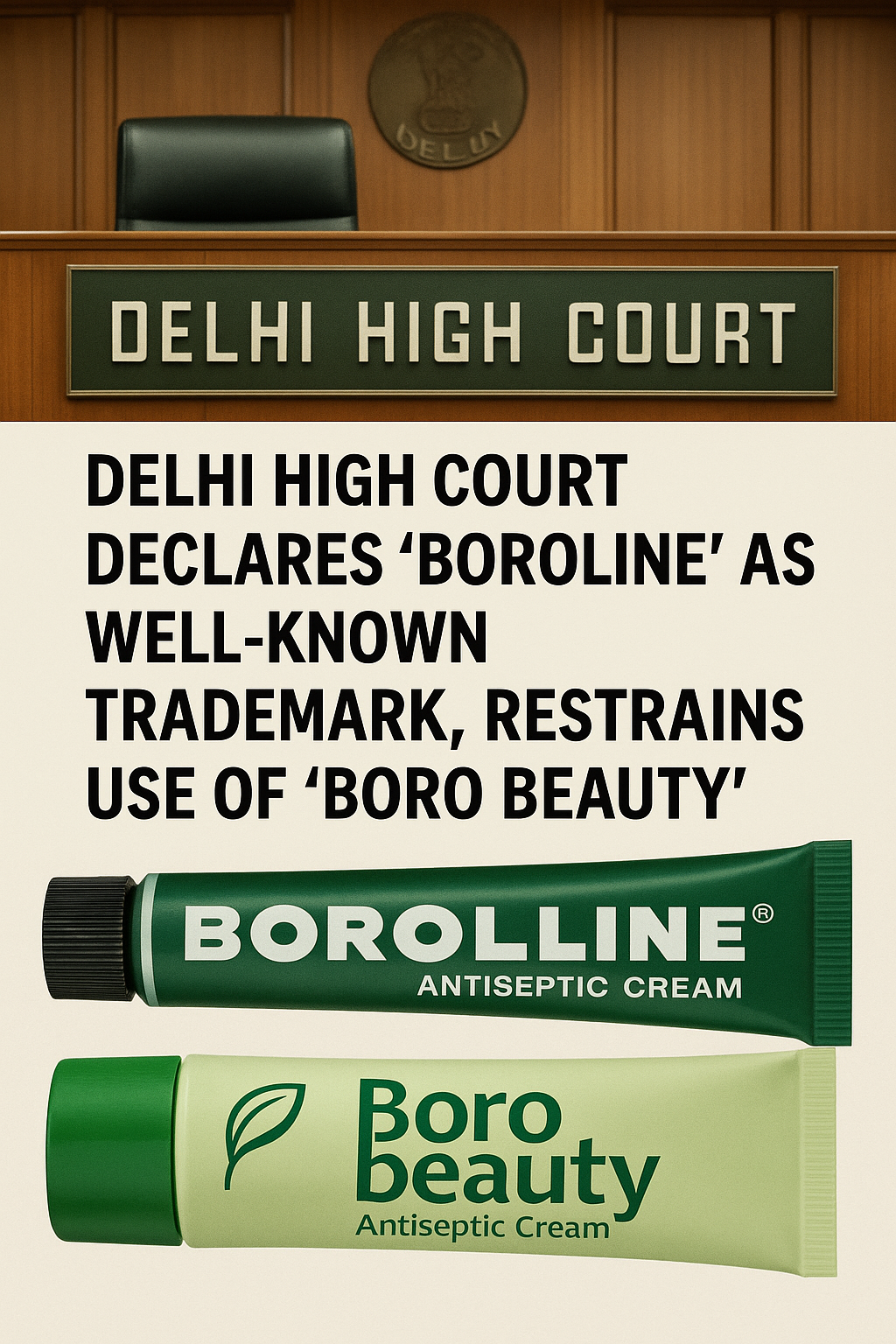
How Boroline Secured Well-Known Trademark Status in Delhi High Court

A trademark is a distinctive sign, word, name, logo, symbol, label, shape, color combination, sound, or slogan that identifies and distinguishes the goods or services of one business from those of others. A basic dimension to understand the term trademark.
Under the Trade Marks Act, 1999 (India), a trademark protects brand identity and consumer trust.
A well-known trademark (e.g., Boroline, TATA, WIPRO) enjoys enhanced protection across all classes, even for unrelated goods/services.
Background of the case:
The suit was filed by GD Pharmaceuticals in 2019 against Cento Products alleging that the latter adopted the mark “BOROBEAUTY‟ which was deceptively similar to the use of its registered trade mark „BOROLINE‟. Boroline was aggrieved by the imitation of its iconic trade dress of a distinct dark green tube ending in an octagonal black cap.
What are the aspects which made the judgement in favor plaintiff?
The siting justice affirmed that “There is no denying the fact that “BOROLINE” has attained the status of a household name, and is one of the oldest trademarks, which has been in continuous use, preceding the independence of India,”
The court also took note of “The duration of the use of the trademark “BOROLINE”, can be gauged from the document showing the advertisement of the product under the mark “BOROLINE”, as occurring in newspaper on 15th August, 1947, the day, our Country attained Independence,”
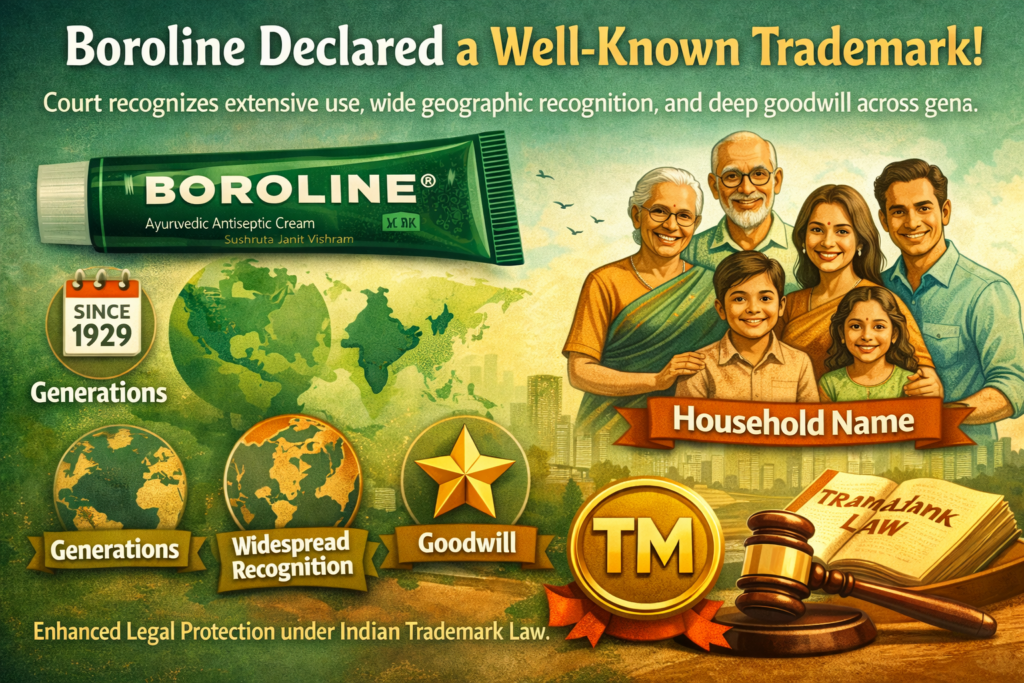
The court declared “Boroline” to be a well-known trademark under the Trade Marks Act, 1999.
It acknowledged that Boroline has:
- Extensive use spanning generations.
- Wide geographical recognition across India (and recognition in other countries).
- Deep goodwill and consumer association — essentially a household name.
As a consequence, Boroline gets enhanced legal protection — beyond its specific product class — under Indian trademark law.
In a significant development in Indian trademark jurisprudence, the Delhi High Court has declared “Boroline”—the iconic antiseptic cream by G.D. Pharmaceuticals Pvt. Ltd.—as a well-known trademark under the Trade Marks Act, 1999, and permanently restrained the use of the mark “Boro beauty” by Cento Products (India).
The Court held that the defendant’s mark and trade dress were deceptively similar, amounting to trademark infringement, passing off, and dilution of Boroline’s long-established goodwill.
Directions of Court to respective authorities:
The court directed the Registrar of Trademarks to add the word to the list of well-known trademarks, upon G. D. Pharmaceuticals, the company which manufactures Boroline, completing the requisite formalities.
Dimensions of Final Verdict and Impact on Both Parties:
- The court permanently injuncted a company namely Cento Products, from manufacturing or selling or advertising similar products with the name “BOROBEAUTY‟.
- The court directed Cento Products to change its trade dress and trademark, which shall be totally distinct and different from Boroline’s well-known trademark and trade dress.
Why “Borobeauty” Was Restrained
The Delhi High Court found that:
- The prefix “Boro” had acquired secondary meaning exclusively associated with Boroline
- The defendant adopted a similar naming structure and visual appearance
- Such adoption was not coincidental, but intended to ride on Boroline’s reputation
- The conduct amounted to unfair competition and consumer deception
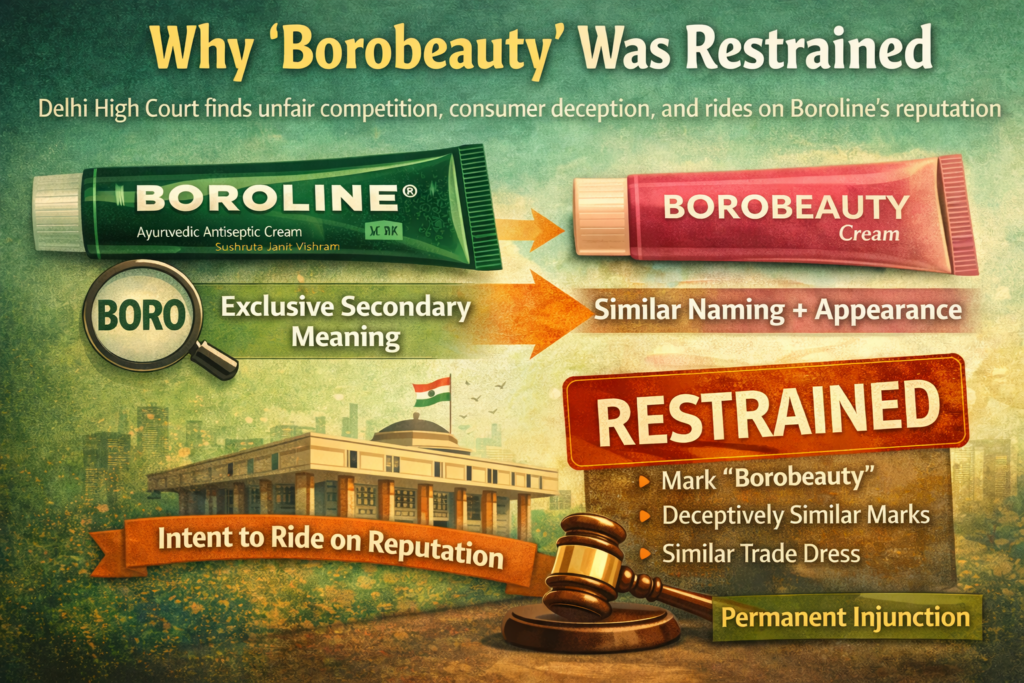
Accordingly, the Court issued a permanent injunction restraining the use of:
- The mark “Borobeauty”
- Any other mark deceptively similar to Boroline
- Packaging or trade dress resembling Boroline’s distinctive appearance
Relief Granted by the Court
- Permanent injunction against use of Borobeauty
- Direction to adopt a distinct and non-infringing brand identity
₹2 lakh costs imposed on the defendant - Direction to include Boroline in the official list of well-known trademarks
Significance of the Ruling on IPR Startegies
This judgment is a milestone for trademark owners and IP strategists, as it:
- Strengthens enforcement of well-known trademarks in India
- Reinforces protection of trade dress and brand identity
- Sends a strong message against phonetic and visual imitation
- Demonstrates judicial intolerance toward free-riding on legacy brands
WHY THIS CASE IS IMPORTANT FOR IP STUDENTS AND PRACTITIONERS
For students preparing for Trademark Agent and Patent Agent Examinations, this case provides a practical demonstration of:
• Trademark infringement and passing off
• Judicial standards for ex‑parte injunctions
• Role of intermediaries in modern IP enforcement
For practitioners, the case reinforces that trademark litigation today requires legal strategy aligned with daily events of litigation.
Conclusion : The Delhi High Court’s decision in the Boroline matter sends a clear notice that Trade dress similarity can independently defeat an application even if the word mark differs. Even Class Strategy & Cross-Class Risk Court Position underscored that Well-known marks enjoy protection across classes.
Leave a Reply