Exploring Intellectual Property at the Intersection of Creativity and Regulation
In modern era Intellectual Property is one such aspect which is expanding its landscape in wider arena, which is not scientific inventions, trade and services but also in art which is commonly known as creativity, the legal frame work available to protect and promote creativity is through copy right which is equivalent to other aspects of Innovation which are protected as Intellectual Property Rights.

With an objective to address intersection of art and law is of growing significance in contemporary India. The Centre for Art and Law Initiatives (CALI) hosted a conference “Art Meets Law”in collaboration with RFKN Legal and the German Institute for Art and Law (IFKUR)
The inaugural Conference, by the , took place on January 31, 2025, at the India International Centre in New Delhi. This event is made landmark by bringing together legal experts, policymakers, and art professionals to explore the intersection of art and law, focusing on themes such as cultural heritage protection, art crime, restitution, and the commercialization of art.
The main highlights of conference are :
- Keynote Address: The topic of “Repatriation and Restitution in India” by the Attorney General for India,
- Distinguished Lectures:
- “Judicial Insight on Cases Concerning Art Works” by one of the Retd. Justice , Senior Advocate and Former Judge, Patna High Court.
- “Criminal Aspects of International Art” by , Secretary of Public Prosecutions, Office of the Director of Public Prosecutions (ODPP), Kenya.
- “Fakes, Forgeries and Art Works” by , Senior Advocate.
- “Commercial Aspects of Art and Law” by , Director, Institute for Art and Law (IFKUR, Germany).
- Special Guest Address: “Legal Efforts for the Repatriation of Stolen Art” by Director and Head of Public Prosecution, Kenya.
- Panel Discussion: “Challenges of Repatriation and Restitution of Art Works”,
The conference also marked the official launch of CALI, established in 2024 as a hub for dialogue and knowledge exchange on art law in India, aiming to connect artists, legal experts, and policymakers.
Who were the participants ?
The event was open to all legal, academic, art, and policy enthusiasts and professionals, with no registration fee.
Organizer of the Event
- Centre for Art and Law Initiatives (CALI): Established in 2024, CALI serves as a platform for interdisciplinary engagement on art law in India.
- RFKN Legal: A global network of lawyers and consultants with expertise in cross-border legal solutions spanning India, Germany, and Kenya.
- German Institute for Art and Law (IFKUR): Founded in 2006, IFKUR focuses on legal issues in art, cultural property, and related fields, and is renowned for its annual Heidelberg Art Law Days.
This conference represented a significant step in fostering international collaboration and dialogue on the legal dimensions of art and cultural heritage.
Relevance of Conference in shedding light on Indian Law which protects Creativity :
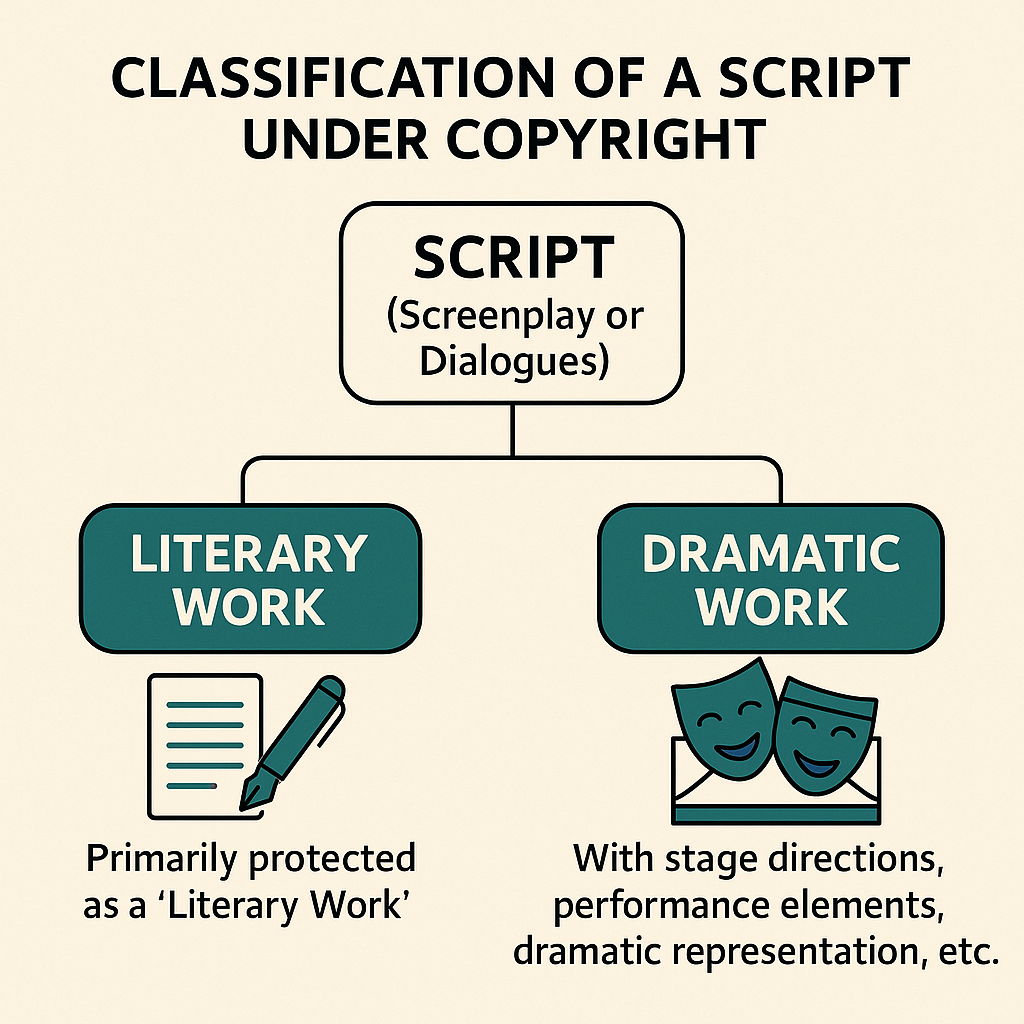
Artistic works in India are protected through Indian copyright law, as script which includes screenplay and/or dialogues is primarily protected as a “Literary Work”.

The provisions are as follows :
- Literary Work (Section 2(o), Copyright Act, 1957): Includes books, writings, computer programs, tables, compilations, etc. A film script or screenplay falls here because it is essentially a written text.
- Dramatic Work (Section 2(h)): Includes any piece for recitation, choreographic work, entertainment in dumb show, or performance that is fixed in writing (but excludes cinematograph films). A script with stage directions, performance elements, or dramatic representation can also qualify as a dramatic work.
ROLE OF IIPTA
At the Indian Institute of Patent and Trademark (IIPTA), we train students and professionals to understand intellectual property law as it is applied in real-world practice, not as abstract theory. Our programs bridge the gap between creativity and compliance.
Conclusion :
In practice, most screenplays and dialogues are registered as literary works, but if the script is meant for performance (like a stage play), it can also be categorized as a dramatic work.