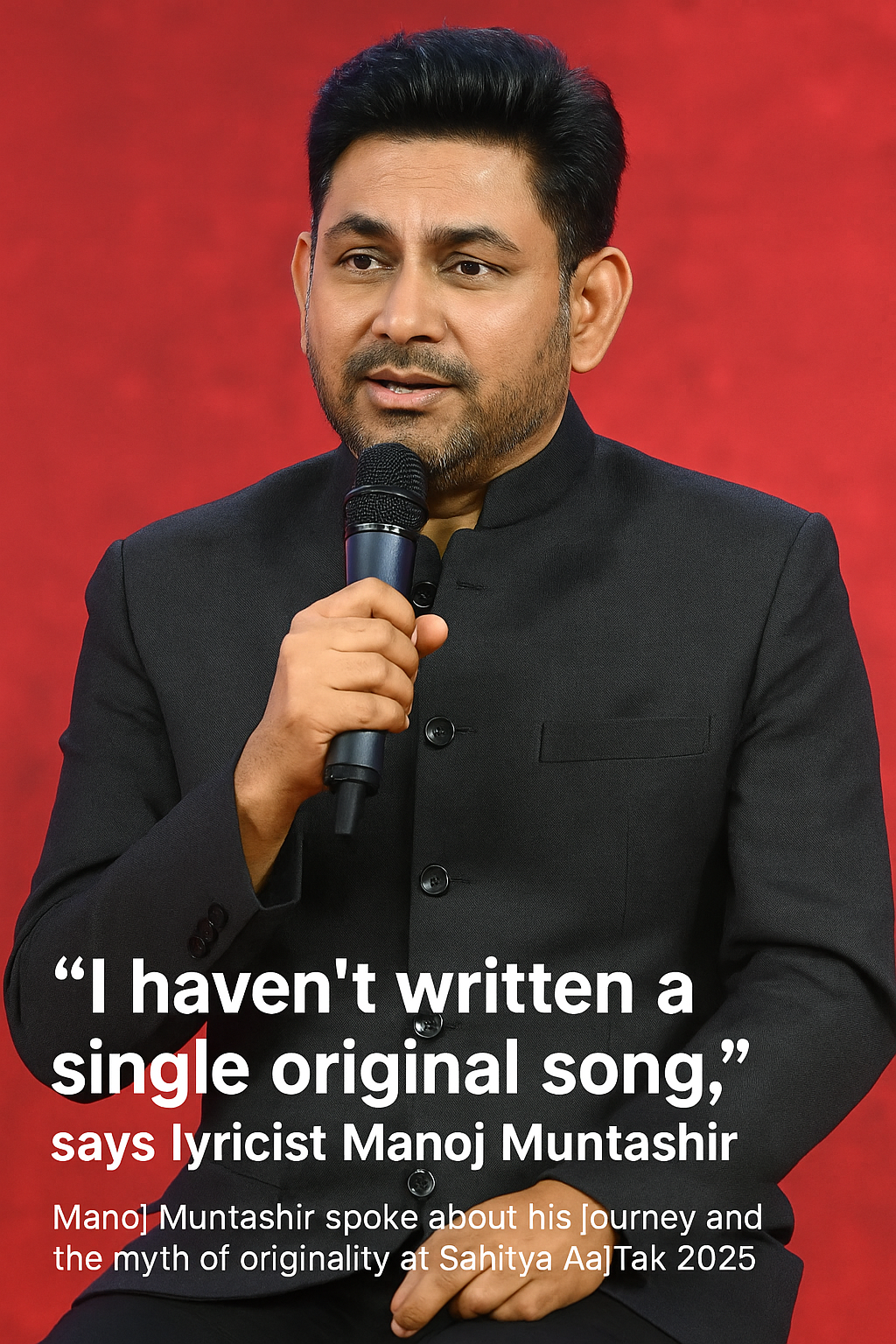
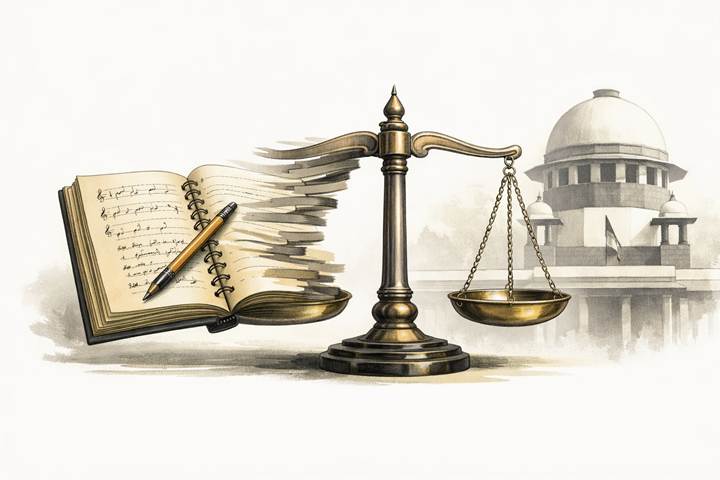
At Sahitya AajTak 2025, lyricist and screenwriter Manoj Muntashir made a statement that resonated far beyond the literary audience present at the event. When he said, “I haven’t written a single original song,” it was not an act of humility or provocation, but a legally and philosophically accurate reflection of how creativity truly functions.
This article analyses that statement through the lens of Indian copyright law, creative jurisprudence, and industry practice, offering deeper insights for creators, legal professionals, students, and institutions.
CREATIVITY AS A CONTINUUM, NOT AN ISOLATED ACT
Indian copyright law has never demanded novelty in the sense used in patent law. Creativity, in copyright, is cumulative. Authors build upon cultural memory, linguistic traditions, and lived experiences. Courts have consistently recognised that human creativity is evolutionary, not revolutionary.
Originality under the Copyright Act, 1957 merely requires independent creation with minimal creativity. It does not require that the work be unprecedented.
IDEA–EXPRESSION DICHOTOMY
One of the most misunderstood principles in copyright law is the idea–expression dichotomy. While ideas are free for all, expressions are protected. Manoj Muntashir’s statement fits squarely within this framework. A lyricist may draw from emotions, folklore, poetry, or even earlier songs, but the final lyrical expression must bear the author’s individual imprint.
INSPIRATION VS INFRINGEMENT
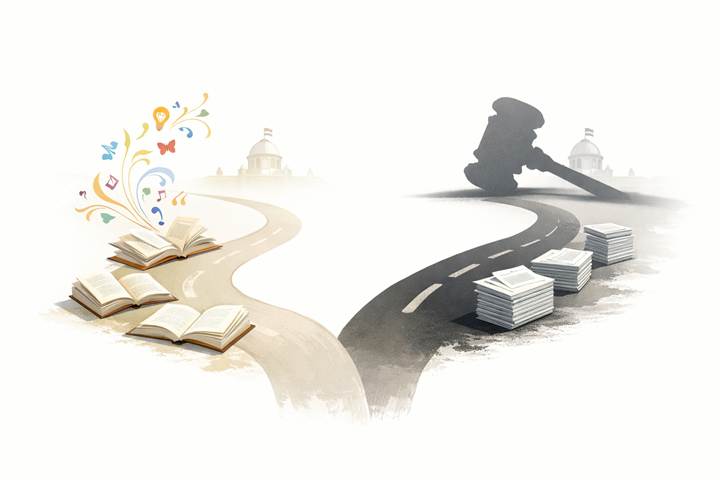
Inspiration is lawful when it involves absorption and reinterpretation. Infringement occurs when there is substantial and material copying of protected expression. Indian courts apply the test of substantial similarity, focusing on whether an average listener or reader can recognize copying.
PLAGIARISM AND COPYRIGHT INFRINGEMENT
Plagiarism is an ethical concern, while copyright infringement is a legal violation. A work may be criticised as plagiarised even if it does not meet the threshold of infringement. This distinction is crucial for creators operating in the public eye.
MORAL RIGHTS AND AUTHORSHIP
Section 57 of the Copyright Act safeguards the moral rights of authors, including the right of attribution and the right to object to distortion. Even when economic rights are assigned, moral rights subsist.
DIGITAL AGE CHALLENGES
With streaming platforms, remixes, sampling, and AI-assisted creation, questions of originality and ownership have become more complex. Contracts, registrations, and rights management are now more important than ever.
LEARNINGS FOR STUDENTS AND PROFESSIONALS
• Creativity is cumulative
• Law protects expression, not ideas
• Attribution remains a legal right
• Contracts define ownership
• Registration strengthens enforcement
ROLE OF IIPTA
At the Indian Institute of Patent and Trademark (IIPTA), we train students and professionals to understand intellectual property law as it is applied in real-world practice, not as abstract theory. Our programs bridge the gap between creativity and compliance.
CONCLUSION
Manoj Mutahir’s statement dismantles the myth of absolute originality. Copyright law does not punish influence; it protects transformation. Understanding this distinction is essential for anyone working in creative or legal industries.