Author: karthik

  • The COVAX In Patent Saga Continues:

    What Repeated Amendments Reveal About Patent Strategy in High-Stakes Biotech Innovations

    Introduction

    The early years of the 2020s will be remembered as a defining phase for global public health systems. The COVID‑19 pandemic disrupted economies, strained healthcare infrastructure, and compelled governments and scientific institutions to act at unprecedented speed. For India, this period marked the development of Covaxin—its first indigenously developed COVID‑19 vaccine. While Covaxin emerged as a scientific and strategic success, its journey through the patent system has been complex and instructive.

    This article examines the Covaxin patent saga not from a political or emotional standpoint, but through a strict intellectual property lens. The repeated amendments to the patent application filed by Bharat Biotech International Limited (BBIL) raise important questions on inventorship, ownership, prosecution strategy, and transparency—issues that are critically relevant for innovators, biotech startups, R&D teams, and patent professionals.

    Scientific and Technical Background of Covaxin

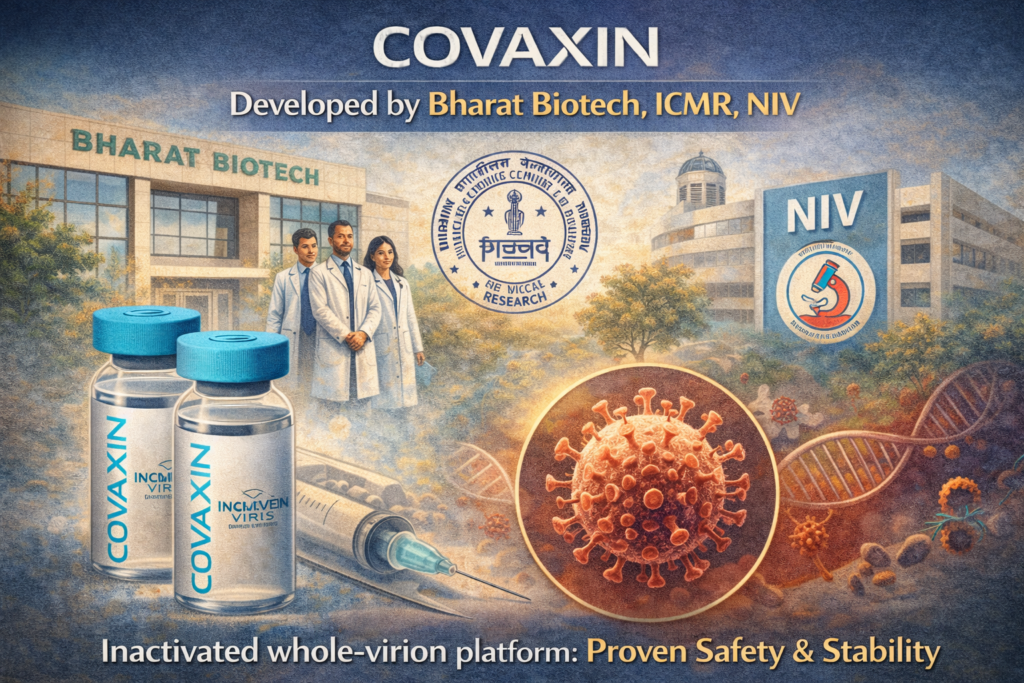
    Covax in was developed by Bharat Biotech International Limited in collaboration with the Indian Council of Medical Research (ICMR) and the National Institute of Virology (NIV). The vaccine uses a traditional inactivated whole‑virion platform, a well‑established technology known for safety and stability.
    Key features include
    • Inactivated whole‑virion SARS‑CoV‑2 vaccine
    • Use of Algel‑IMDG adjuvant to enhance immune response
    • Intramuscular administration
    • Phase‑3 efficacy of approximately 77.8%
    • Demonstrated protection against severe disease and multiple variants
    • Approval for emergency use in India and WHO Emergency Use Listing

    From a public‑health perspective, Covaxin represented self‑reliance and scientific capability. However, innovation success does not automatically translate into sound intellectual property execution.

    The Patent Filing Controversy

    The original patent application for Covaxin was filed on 21 August 2020 by BBIL. At this stage, the application listed only BBIL scientists as inventors. This decision became controversial because the vaccine was developed under a public‑private collaboration involving ICMR and NIV, with documented scientific contributions and public funding.
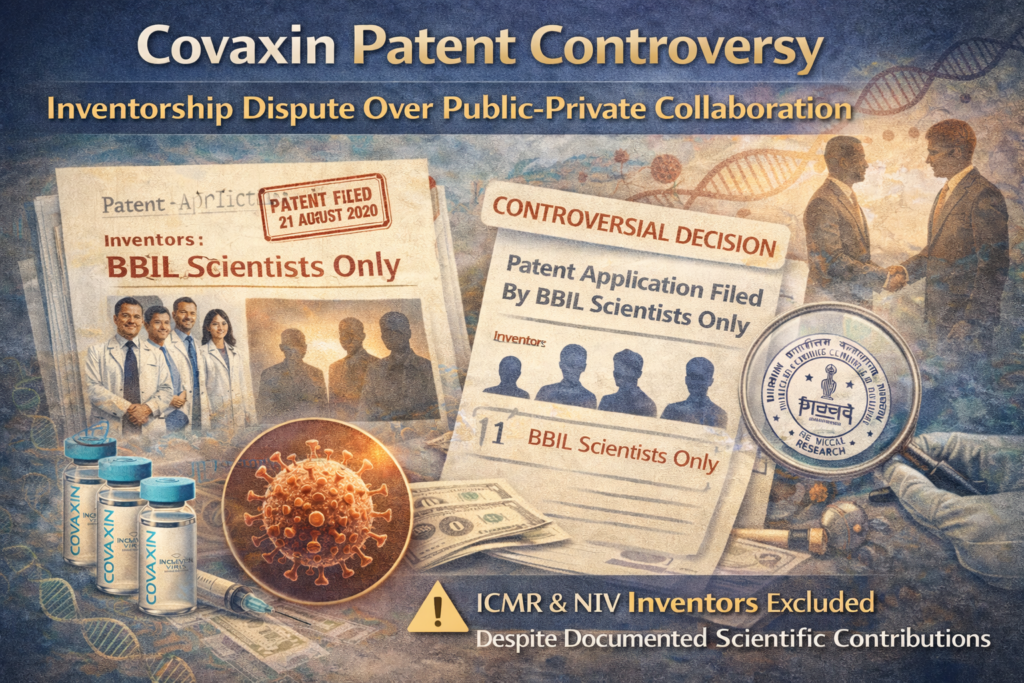
    Inventorship under patent law is not a matter of convenience or corporate preference. It is a legal determination based on actual contribution to the inventive concept. Any omission—intentional or otherwise—creates vulnerability in prosecution, enforcement, and licensing.

    Timeline of Amendments

    First Amendment – July 11, 2024:
    Following media scrutiny and objections raised by government authorities, BBIL revised the patent application to include the National Institute of Virology as a co‑applicant and co‑owner. This amendment acknowledged collaborative ownership of the invention.

    Second Amendment – August 1–2, 2024:
    In a further corrective step, the application was amended again to explicitly include specific NIV scientists as co‑inventors. These changes were reflected through revised statutory filings.

    Repeated amendments of this nature are uncommon in high‑value pharmaceutical patents and naturally invite closer legal and commercial scrutiny.

    Legal and Financial Dimensions

    The Memorandum of Understanding between BBIL and ICMR reportedly provided for joint ownership of intellectual property, while revenue‑sharing arrangements were governed separately. Financial disclosures indicate that ICMR invested approximately ₹35 crore in the development of Covaxin, including around ₹20 crore for Phase‑3 clinical trials. In return, it reportedly received royalty payments of about ₹172 crore.
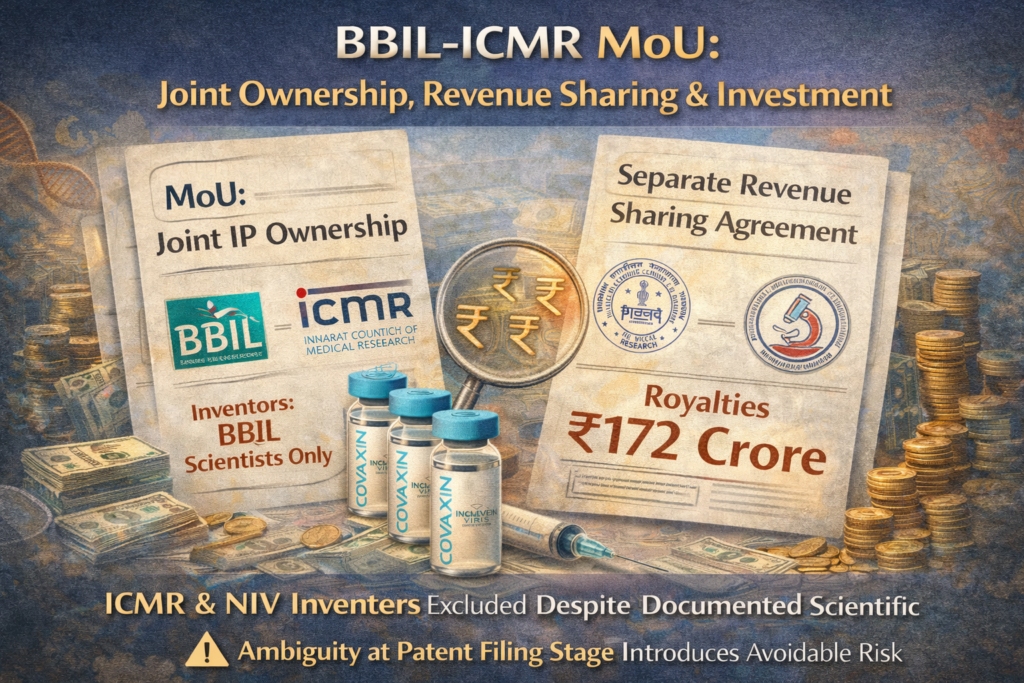
    While ownership rights and pecuniary interests can be legally separated, ambiguity at the patent filing stage introduces avoidable risk.

    Why Repeated Amendments Matter

    From an IP strategy perspective, repeated amendments:
    • Raise concerns during investor due diligence
    • Attract scrutiny under Section 59 of the Patents Act
    • Complicate enforcement and licensing negotiations
    • Weaken bargaining positions during technology transfer

    In modern biotech, patents are evaluated not only for novelty and inventiveness, but also for transparency, prosecution history, and public accountability.

    Lessons for Innovators and R&D Teams

    The Covaxin case highlights several critical lessons:
    1. Inventorship must be identified correctly at the earliest stage.
    2. Public funding demands higher standards of disclosure and transparency.
    3. High‑quality drafting at the provisional and complete specification stage reduces long‑term risk.
    4. Investors increasingly demand clarity on ownership, amendments, and freedom‑to‑operate.

    Impact on India’s Biotech Ecosystem

    For startups, academic researchers, and publicly funded innovators, the Covaxin patent saga functions as a cautionary benchmark. It demonstrates how patent strategy, funding structure, legal compliance, and public perception intersect in high‑impact technologies.

    How IIPTA Supports Innovators and Patent Aspirants

    At the Indian Institute of Patent & Trademark (IIPTA), we focus on bridging the gap between theory and practice. Our training emphasizes:
    • Patent drafting aligned with Section 10
    • Ownership and inventorship compliance under Sections 20 and 28
    • Real‑world prosecution strategy
    • Case‑based learning from live biotech disputes
    • Patent Agent Examination preparation
    • One‑to‑one expert mentoring

    The Covaxin patent saga is not merely a controversy, it is a powerful learning tool. It underscores that in high‑stakes innovation, intellectual property strategy must be as robust as the science itself. For innovators and aspiring patent professionals, this case reinforces the importance of accuracy, transparency, and foresight in patent filing and prosecution.
  • Public Money, Private Patents: What the COVAX in Episode Reveals About India’s IP Governance

    Public Money, Private Patents: What the COVAX in Episode Reveals About India’s IP Governance

    Introduction: When Innovation Is Public, But Ownership Is Private

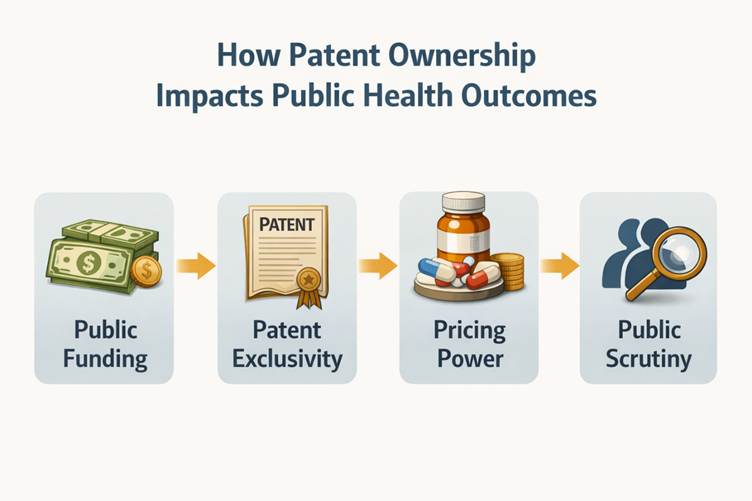
    The COVID-19 pandemic forced governments across the world to fund innovation at unprecedented scale. In India, vaccines like Covaxin became symbols of scientific capability, public resilience, and national self-reliance.

    Yet behind the success narrative lies a quieter, more uncomfortable question:

    When public money de-risks innovation, who should own the resulting intellectual property?

    The Covaxin episode brings this question into sharp focus — not as an allegation, but as a policy lesson.

    Covaxin’s Development: A Public–Private Collaboration

    Covaxin was not developed in isolation by a private entity.

    Key public contributions included:

    • ICMR’s scientific collaboration
    • NIV Pune’s provision of the SARS-CoV-2 strain
    • Use of public research infrastructure
    • Regulatory facilitation during an emergency

    This collaboration significantly de-risked research and development, shortening timelines and reducing uncertainty for the private partner.

    From a policy standpoint, this matters.

    The Patent Controversy: Where Transparency Slipped

    The controversy did not arise because a patent was filed.

    It arose because:

    • initial patent filings excluded ICMR as a co-applicant
    • inventorship and ownership details were unclear
    • licensing and revenue-sharing terms were not publicly disclosed

    This created a perception fair or not that public contribution was legally sidelined, even if later corrected.

    In high-trust sectors like public health, perception itself is consequential.

    Pricing, Access, and Public Interest

    Another flashpoint was pricing.

    Questions raised included:

    • Should vaccines developed with public funding carry differential pricing?
    • Were states and private hospitals charged equitably?
    • Did public funding translate into public leverage?

    These are not ideological questions.
    They are contractual and policy design questions.

    The WTO Paradox: Global Advocacy vs Domestic Practice

    Internationally, India supported discussions around:

    • IP waivers
    • equitable vaccine access
    • global public health considerations

    Domestically, however, the Covaxin episode revealed limited disclosure of IP arrangements.

    This divergence exposed a policy gap:

    advocating flexibility globally while practicing opacity domestically.

    What This Episode Really Exposes

    The Covaxin case is not about blame.
    It is about system design.

    It highlights:

    • absence of standard IP clauses in public funding contracts
    • lack of default joint ownership norms
    • weak public disclosure mechanisms
    • no clear march-in or access safeguards

    These gaps are structural, not incidental.

    Learnings for Future Publicly Funded Innovation

    A mature innovation ecosystem requires:

    • clear IP ownership rules at funding stage
    • transparent licensing terms
    • pricing safeguards linked to public funding
    • retained government rights in emergencies

    Countries that ignore this risk:

    • public distrust
    • policy backlash
    • weakened innovation legitimacy

    A Policy Roadmap Going Forward

    India must institutionalise:

    • mandatory IP disclosure norms for public-private R&D
    • default joint ownership in publicly funded health innovations
    • compulsory licensing triggers linked to access
    • parliamentary oversight of major health IP assets

    This protects innovation and credibility.

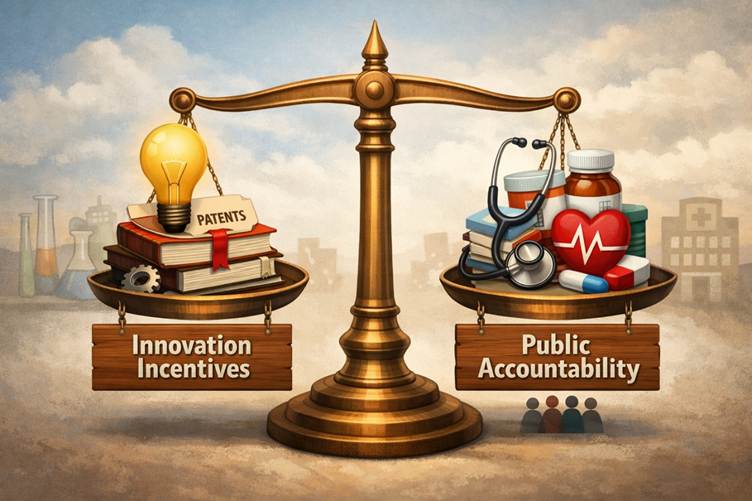
    Conclusion: Innovation Needs Trust, Not Just Patents

    Patents are legitimate tools of innovation.
    Public funding is a legitimate policy choice.

    But when the two intersect, transparency is not optional.

    The Covaxin episode should be remembered not as a controversy, but as a turning point — an opportunity to align India’s innovation policy with public accountability.

    To understand how intellectual property, public policy, and innovation intersect in India, explore structured learning programs at the Indian Institute of Patent and Trademark (IIPTA).

  • Patents vs Farmers’ Rights under TRIPS

    Patents vs Farmers’ Rights under TRIPS

    How India Walks a Legal and Policy Tightrope

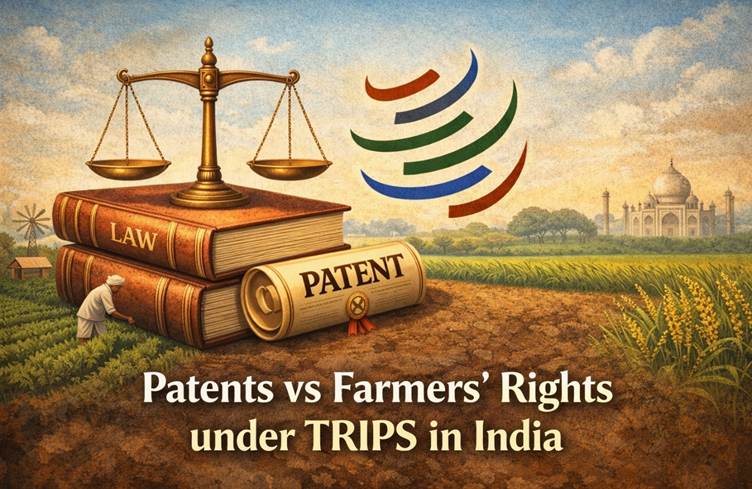
    Patents vs Farmers’ Rights under TRIPS: How India Walks a Legal and Policy Tightrope

    Introduction: Why This Debate Still Shapes India’s IP Policy

    The intersection of intellectual property rights and agriculture is one of the most complex — and politically sensitive — areas of global IP governance. Unlike patents in pharmaceuticals or technology, agricultural intellectual property directly impacts food security, rural livelihoods, biodiversity, and national sovereignty.

    For India, this debate carries added weight. With a large agrarian population and a long tradition of seed saving and exchange, any IP framework governing agriculture must balance innovation incentives with social realities. This balance is tested most visibly at the intersection of TRIPS obligations and farmers’ rights.

    India’s legal response is neither accidental nor defensive. It is deliberate, strategic, and deeply rooted in public interest.

    Understanding TRIPS: What Does International Law Actually Require?

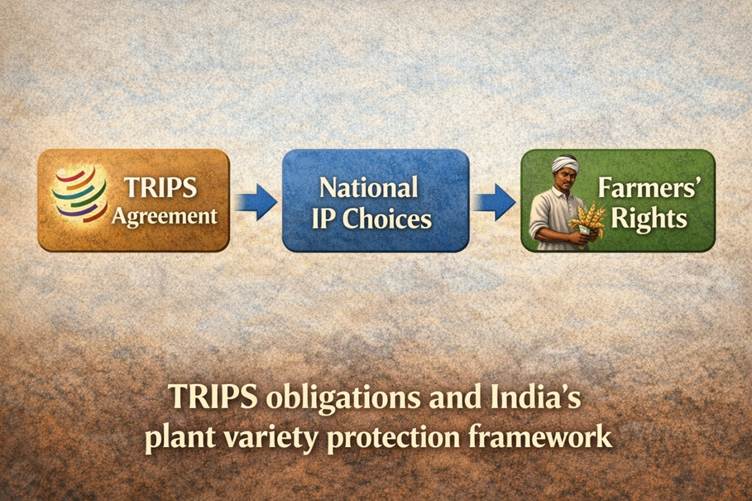
    Under Article 27.3(b) of the TRIPS Agreement, WTO member states are required to provide protection for plant varieties. However, TRIPS does not mandate a single model.

    Member states may choose to protect plant varieties through:

    • patents, or
    • an effective sui generis system, or
    • a combination of both

    This flexibility was intentionally built into TRIPS to accommodate countries with diverse agricultural systems, economic priorities, and food security concerns. Importantly, TRIPS do not compel countries to patent plants, seeds, or animals.

    India used this flexibility fully  and lawfully.

    India’s Sui Generis Choice: The PPVFR Act, 2001

    Rather than adopting a patent-heavy or breeder-centric model, India enacted the Protection of Plant Varieties and Farmers’ Rights Act, 2001 (PPVFR Act).

    This legislation is globally distinctive because it recognises that innovation in agriculture is not confined to laboratories or corporations. Farmers themselves are breeders, conservers, and innovators.

    The PPVFR Act seeks to:

    • encourage formal plant breeding,
    • protect farmers’ traditional practices,
    • ensure benefit-sharing,
    • promote sustainable agricultural development.

    Unlike international regimes that prioritise commercial breeders, India’s approach embeds social equity directly into its IP framework.

    Farmers’ Rights under Indian Law: Not an Exception, but a principle

    A defining feature of the PPVFR Act is its explicit statutory recognition of farmers’ rights.

    Farmers are legally entitled to:

    • save, use, sow, and re-sow farm-saved seeds,
    • exchange and share seeds,
    • sell unbranded farm produce,
    • claim benefit-sharing for conserved genetic material,
    • protection against innocent infringement.

    These rights are not concessions. They are legal acknowledgements of the historical role farmers have played in conserving and developing plant genetic resources.

    Where the Conflict Begins: Patents, Biotechnology, and Control over Seeds

    Although plants and seeds are excluded from patentability under the Indian Patents Act, conflict has arisen in the context of biotechnological inventions.

    Genetic traits, recombinant technologies, and hybrid seed technologies have tested the boundaries between:

    • patent law, and
    • plant variety protection law.

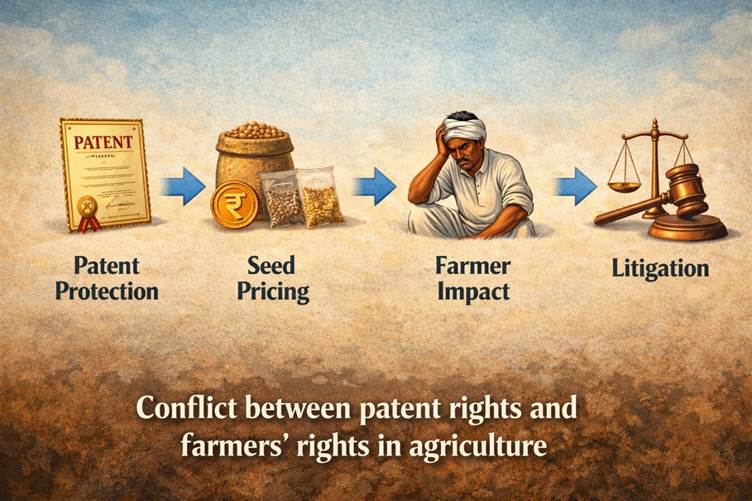
    The Monsanto v. Nuziveedu litigation exposed these tensions clearly, raising questions about:

    • indirect control over seeds through patent claims,
    • seed pricing and affordability,
    • overlap between patent monopolies and farmers’ freedoms.

    Indian courts have shown caution in extending patent protection in ways that could undermine farmers’ rights or distort agricultural markets.

    TRIPS vs Farmers’ Rights: A False Legal Dichotomy

    It is often suggested that farmers’ rights conflict with TRIPS obligations. This is a misleading narrative.

    TRIPS itself do not prohibit farmers’ rights. The tension arises when TRIPS-plus standards often introduced through bilateral trade agreements or external pressure seek to narrow domestic policy space.

    India’s framework demonstrates that:

    • innovation incentives and farmers’ rights can coexist,
    • compliance with international law does not require surrendering food security concerns.

    Global Pressure and India’s Policy Position

    Developed economies frequently advocate for:

    • patent-based plant protection,
    • UPOV-style regimes,
    • stronger enforcement mechanisms favouring breeders.

    India has consistently defended its sui generis model as:

    • fully TRIPS-compliant,
    • socially necessary,
    • economically justified.

    India has also supported international discussions on:

    • disclosure of origin,
    • protection of traditional knowledge,
    • benefit-sharing mechanisms.

    This reflects a broader view of IP — one that connects innovation with equity and sustainability.

    Implementation Challenges on the Ground

    Despite a robust legal framework, challenges remain:

    • limited awareness among farmers about statutory rights,
    • underutilisation of benefit-sharing mechanisms,
    • procedural complexity in registration,
    • institutional capacity constraints.

    Without effective implementation, even well-designed laws risk becoming symbolic rather than transformative.

    Policy Roadmap: Strengthening the Balance

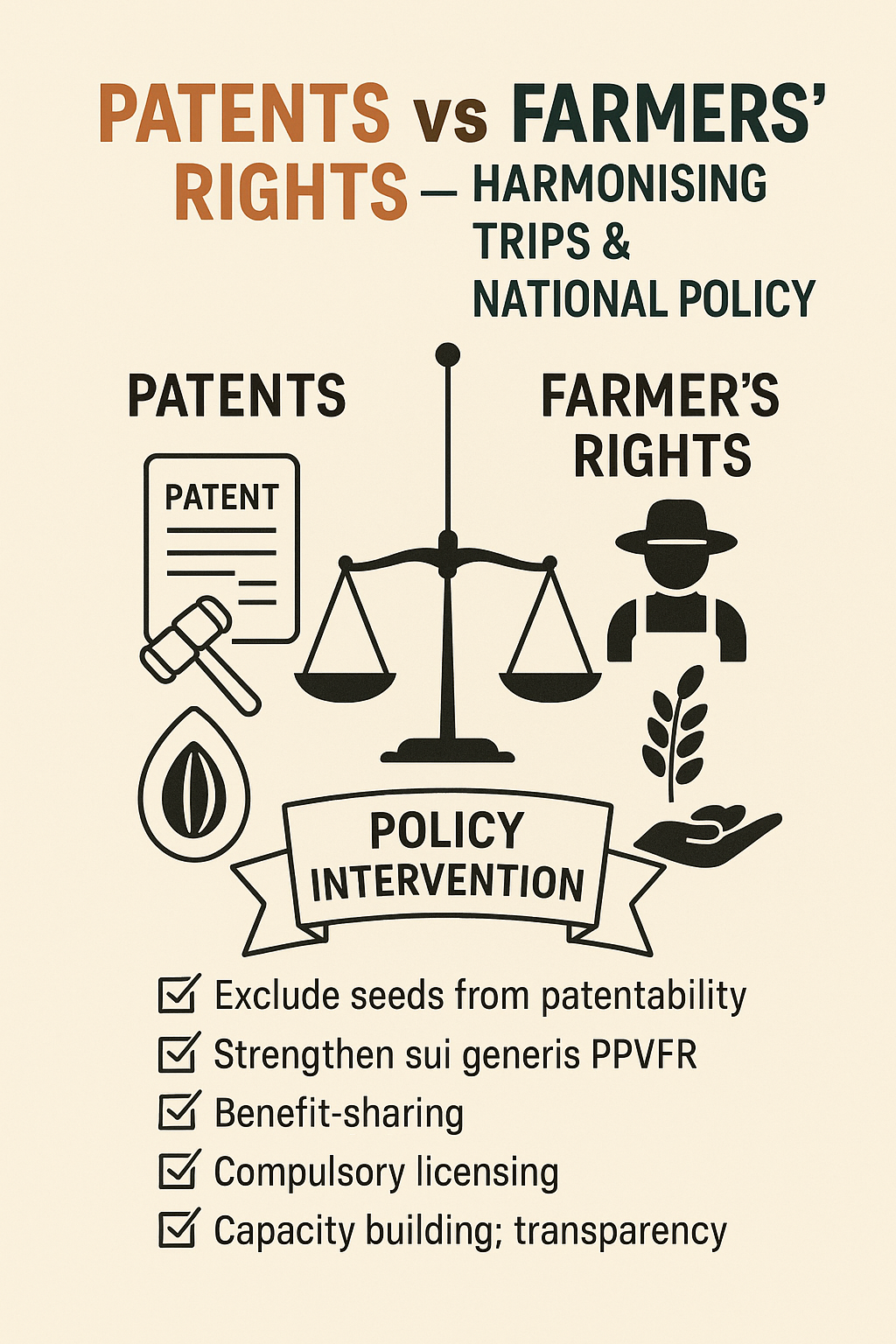
    A sustainable agricultural IP regime requires:

    • clearer statutory demarcation between patents and plant varieties,
    • carefully designed compulsory licensing mechanisms,
    • stronger enforcement of benefit-sharing provisions,
    • integration of IP law with biodiversity regulation,
    • capacity-building for farmers and stakeholders.

    These measures can reduce uncertainty while preserving both innovation incentives and public interest.

    Conclusion: Beyond Compliance, Toward Conscious Policy

    Patents and farmers’ rights need not exist in opposition. TRIPS provides the flexibility; national policy provides the conscience.

    India’s PPVFR Act illustrates how intellectual property law can support innovation without sacrificing equity, food security, or farmer livelihoods. For IP professionals, policymakers, and students, understanding this balance is essential not just legally, but ethically.

    For structured learning on agricultural IP, patent analysis, and TRIPS compliance, explore specialized programs at the Indian Institute of Patent and Trademark (IIPTA).

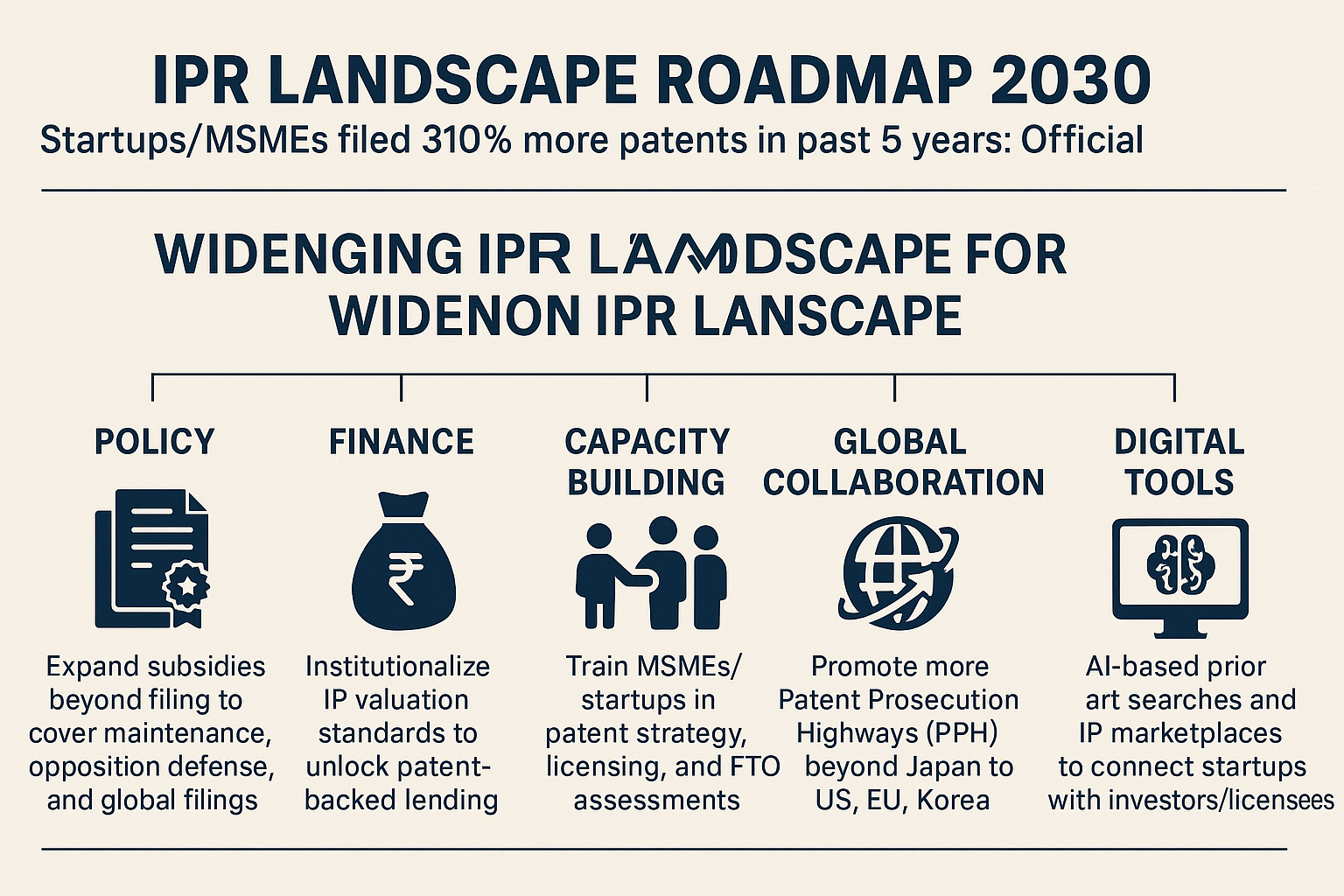
  • Data Says there is an amplification of Patent Filings which amounts to more than 300 percentage from the Startup and MSME ecosystem

    Data Says there is an amplification of Patent Filings which amounts to more than 300 percentage from the Startup and MSME ecosystem

    A Thrust for expansion of Innovation Landscape

    In the developing economy it is not only the role of large industries who always take the responsibility of social welfare in terms of employment generation the same role is shifting to ground level players who are popularly known as Micro Small and Medium Enterprises and in recent years one more participant is startups. These players are also demonstrating their potential to contribute for economic development generally and innovation landscape by adapting Research and Development strategies particularly.

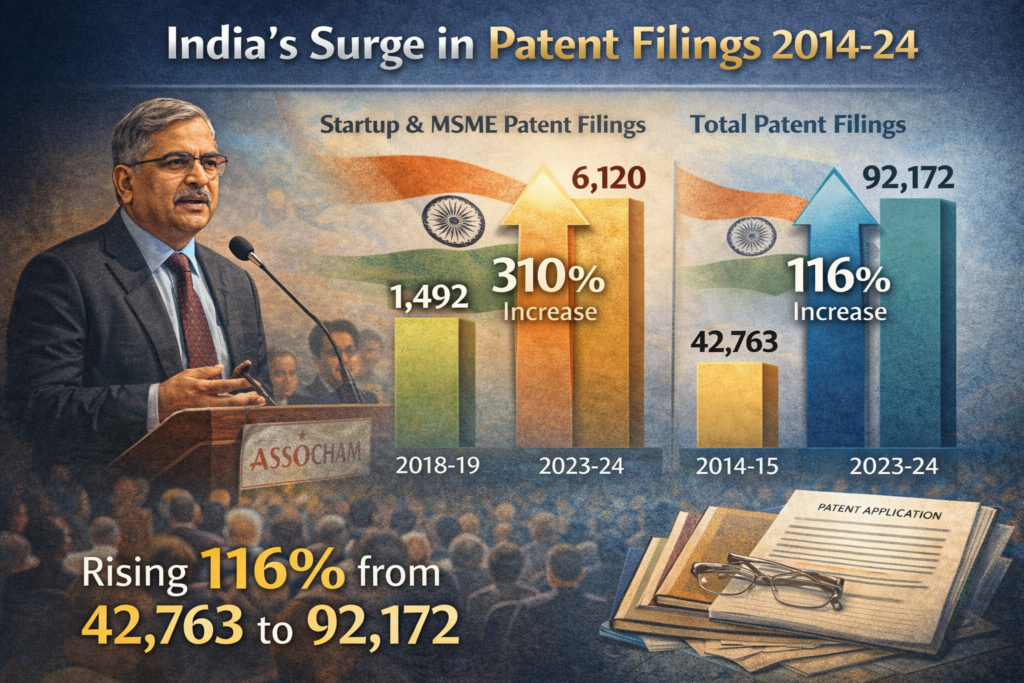
    To justify the above narration, recently Joint Controller General of Patents, Designs and Trademarks, addressing an event organized by ASSOCHAM mentioned that Patent filings by startups and MSMEs have increased by 310 per cent in the last 5 years from 1,492 in 2018-19 to 6,120 in 2023-24 that the filing of patent applications in India has surged by 116 per cent rising from 42,763 in 2014-15 to 92,172 in 2023-24.

     As we are all aware that innovation should be encouraged through reward, capacity to innovate is considered as individual intellect which is further referred as Intellectual Property and Patent is one such legal protection for 20 years which is provided in India and most of the other countries around the globe.  Patent protection which is one such aspect gives exclusive right to patentee for both product (amendment of 2005 to Indian Patent Act 1970) and also to process, which gives privilege administratively and economically.

    Factors Driven that driven to entry of stakeholders from various strata of Business establishment:  

    There are various dimensions of governance structure takes credit for this progress in justified way which are analyzed as follows ;

    The provisions like early publication which is prescribed under Section 11 A of the Indian Patent Act 1970 for all stakeholders and Expedited examination under Rule 24 C Indian Patent Rules 2003 particularly for Individual/ Startups and MSMEs. The fee structure in various stages of prosecution also highly affordable which are treated in par with individual inventor.

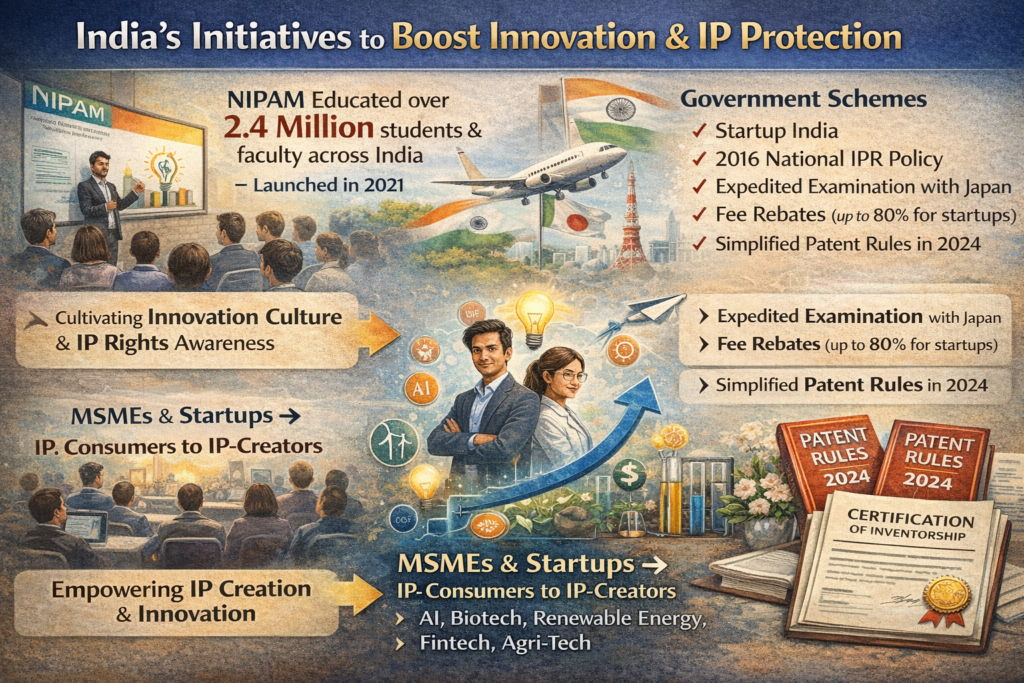
    Which is one dimension and when it comes to implementation stage, National Intellectual Property Awareness Mission (NIPAM) launched in 2021, NIPAM has educated over 2.4 million students and faculty across India about IP rights, fostering a culture of innovation and IP protection.

    This coincides with government schemes like Startup India, National IPR Policy (2016), Patent Prosecution Highway (with Japan), fee rebates (up to 80% for startups), and expedited examination.

    Recently the patent rules have been amended in 2024 in order to further simplify and streamline the procedure and create conducive environment for innovation and protection of Intellectual Property (IP) in India.

    In addition to this a certification of inventorship has also been introduced to enhance patenting ecosystem in India by formally recognizing efforts of the inventors explicitly.

    Time interval to file ‘working statements of patents’ has been reduced from once in a year to once in every three years to lessen the administrative burden on applicants and reduce compliance costs.

    Where MSMEs and startups are shifting from being IP-consumers to IP creators, particularly in AI, biotech, renewable energy, fintech, and Agri-tech.

    From the above aspects analysis it can be infer that India’s IPR policy has provided a comprehensive framework for Innovation ecosystem and stakeholders landscape across the nation in terms of creation, protection and commercialization despite of this a progressive evaluation is necessary.

    Global Positioning and India’s justification:

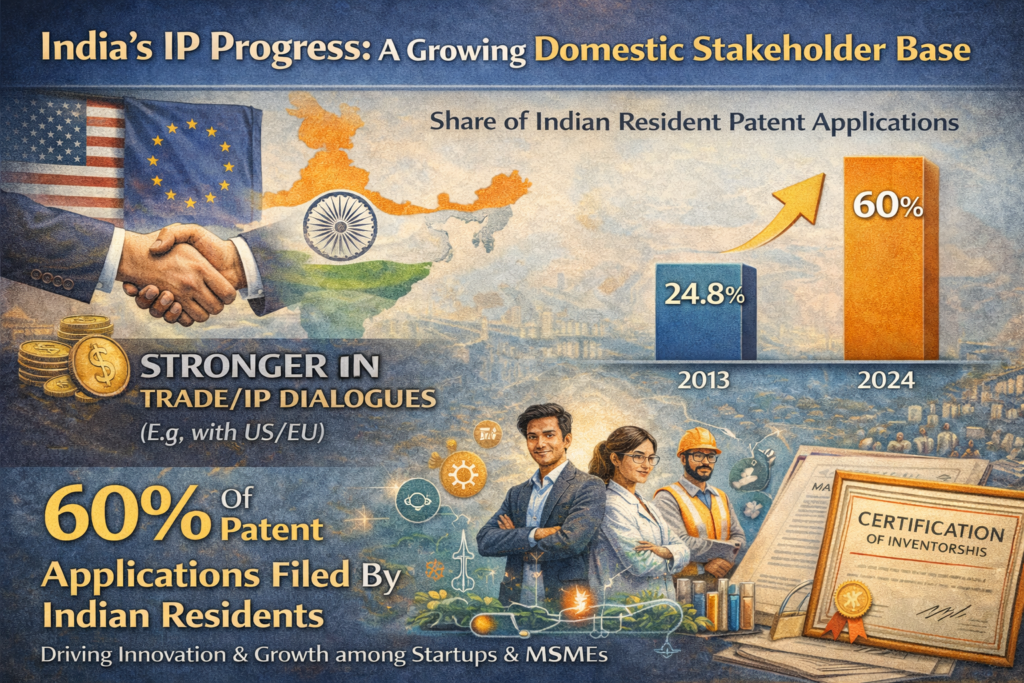
    India, long criticized in USTR’s Special 301 reports for weak IP enforcement, can now showcase a growing domestic stakeholder base invested in IP protection. This strengthens India’s negotiating hand in trade/IP dialogues (e.g., with US/EU).

    It is also to take note of the facts and figures where the share of patent applications filed by Indian residents grew from 24.8% in 2013 to 60% in 2024, showcasing increased domestic engagement in IP protection.

    These developments underscore India’s commitment to fostering innovation and protecting intellectual property, particularly among startups and MSMEs, which are vital to the country’s economic growth and technological advancement.

    What Innovators & R&D Teams Should Learn from This Development and need to take care of multidimensional aspects?

    There is certain thing which should be taken as precautionary aspects before filing the patent application to carry out the process smoothly and to reap benefits of the trends The aspects which need support from the attorney are as follows

    A. Disclose the invention clearly and Completely: Since the India

    Patent law demands high scientific detail, not summaries and description.

    So, any patent application MUST include the dimensions and aspects :

    • Methodology
    • Lab protocols
    • Culture conditions
    • Experimental results
    • Genetic sequence information (in case of biotechnology particularly)
    • Deposit details (if needed in case biological material used for the work)

     B. Draft Claims Smartly (avoid boarder claims) :

    Claims provide actual protection for the invention and claims are considered as legal boundaries of an invention.  So, it is necessary to draft claims in a smarter way as;

    Smart claims:

    • Match the description
    • Are precise
    • Highlight inventive steps

    A well-drafted claim directly proportional to Higher chance of grant.

     C. Understand Section 3 and Section 4 (Non- Patentable Inventions) which are Restrictions under Indian Patent Act 1970 generally
    Common rejection grounds particularly as follows:

    • Section 3(c) – natural organisms
    • Section 3(d) – known variants
    • Section 3(i) – diagnostic & therapeutic methods
    • Section 3(j) – plants, animals, seeds
    • Section 4 -atomic energy

    If your invention falls under any of the above-mentioned category You need expert drafting to overcome objections.

     D. Impact on Startups & Researchers
    This development signals that:

    • India is open to startup and MSME business landscape where government is coming up with policies and executive initiatives.
    • BUT only when applications are drafted with precision and scientific depth will get edge over others.

    For startups, researchers, and companies, the key considerations are as follows:

    • Needful preparation of detailed, high-quality patent specifications.
    • Need to work with experts who understand both science as well as patent law.
    •  Need to avoid broad, vague, or incomplete disclosures.

     How IIPTA Helps Innovators from Startups and MSME landscape by analysis of current or reported filing patterns for training

    At IIPTA (Indian Institute of Patent & Trademark), the innovators get guidance

    understand patent drafting, according to provisions of Section 10, and

    Section 3, with consideration of global patent landscape.

    Guiding with Compliance of Early Publication and Expedited examination under Rule 24c of Indian Patent Rules 2003.

    Conclusion: Inventions become assets not just by filing but by getting legal recognition which is patent in particular case

    When the budding business like startups and MSMEs integrate the inventive approach it widens the landscape of IPR where there is a room for grassroot level talent which amplifies the responsibility of IPR professionals.

  • Delhi High Court Rejects Biotech Patent

    Delhi High Court Rejects Biotech Patent

    What Innovators Must Know Before Filing in India

     Delhi High Court Rejects Biotech Patent: What Innovators Must Know Before Filing in India

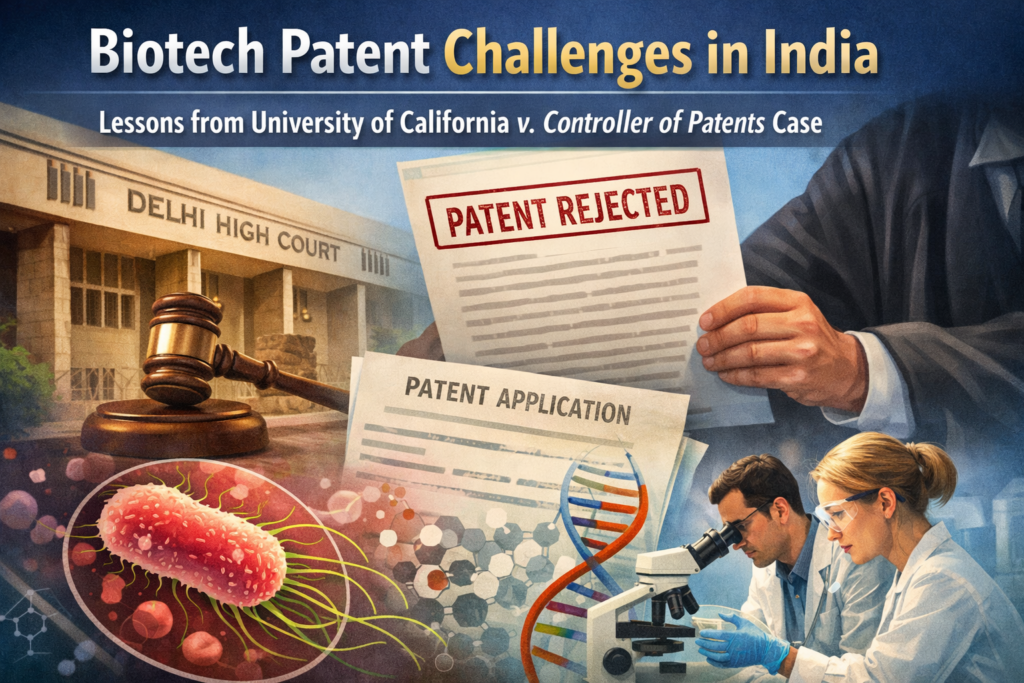
    Biotechnology is one of the most exciting and rapidly advancing fields in the world today, but in India, it is also one of the most challenging domains for patent protection. A recent judgment of the Delhi High Court in The Regents of the University of California v. The Controller of Patents has once again reminded innovators, startups, researchers and companies that even a scientifically brilliant invention can fail at the Indian Patent Office if the drafting is not legally strong. The Court’s decision to uphold the rejection of a genetically modified Salmonella-based vaccine patent offers crucial insights for anyone preparing to file a biotech patent in India.


    The University of California had filed an application for a recombinant Salmonella strain intended for use as a livestock vaccine. While the scientific concept was strong and potentially valuable to the agricultural and veterinary sectors, the patent office rejected the application on several grounds. When the matter reached the Delhi High Court, the judges examined the specification closely and found that the invention did not meet the essential requirements of the Patents Act, particularly the detailed disclosure standards that India expects in biotechnology inventions.
    One of the central problems was that the application lacked a complete and reproducible explanation of how the recombinant strain was created. Indian patent law, under Section 10(4), requires applicants to disclose the invention in such detail that a person skilled in the art can replicate it without undue experimentation. In this case, the Court observed that the patent application did not describe the exact genetic modifications, experimental procedures, or steps required to produce the modified organism. Without this information, the invention could not be reproduced, and therefore did not meet the disclosure requirement.

    Another major issue was the drafting of claims. Under Section 10(5), the claims of a patent must be clear, precise and supported by the description. However, the claims in this application were drafted so broadly that they could cover naturally occurring mutations of Salmonella. This created a second legal problem. Indian law, specifically Section 3(c), does not allow patents on discoveries of natural living organisms. Since the broad wording of the claims risked overlapping with natural forms of the organism, the Court held that the invention fell into the prohibited category.
    In its final decision, the Delhi High Court agreed with the Patent Office and upheld the rejection, not because the science lacked merit, but because the legal drafting did not meet Indian standards. This judgment illustrates a fundamental truth about biotechnology patents in India: the quality of drafting is just as important as the scientific innovation itself. Even the most groundbreaking biotechnological invention can be rejected if the disclosure is incomplete or the claims are not carefully drafted.

    For biotech innovators, this case carries a powerful lesson. India expects a high level of technical detail, including genetic sequences, laboratory methods, experimental data and information that ensures reproducibility. High-level descriptions, summaries or theoretical explanations are not enough. Inventors must also be extremely careful when drafting claims, ensuring they are neither overly broad nor vague, and that they reflect only what is actually invented—not what exists in nature.
    This decision also has significant implications for biotech startups and research teams. In a field where innovation moves quickly, patent protection plays a crucial role in attracting investment, commercializing technology, and protecting competitive advantages. However, drafting a successful biotech patent requires collaboration between scientists who understand the invention and patent professionals who understand the law. Without this partnership, even a promising invention may not meet India’s strict requirements.
    At IIPTA, we help innovators bridge this gap. We train researchers, students and startups to understand how to prepare high-quality patent specifications, how to overcome Section 3 objections, and how to draft claims that are both enforceable and compliant with Indian law. Our programs are designed to give applicants the clarity, confidence and legal strategy needed to protect their inventions successfully.

    The Delhi High Court’s judgment ultimately reminds us that in biotechnology, drafting matters as much as discovery. To succeed in the Indian patent system, innovators must ensure that their applications are complete, precise and legally sound. With the right guidance and expertise, even complex biotech inventions can be protected and commercialized effectively

    Delhi High Court Rejects Biotech Patent: What Every Innovator Must Know Before Filing in India

     Are Biotech Patents Becoming Harder in India?
    Biotechnology is one of the fastest-growing innovation sectors, yet it also faces the highest rejection rate at the Indian Patent Office.
     A recent Delhi High Court decision in The Regents of the University of California v. Controller of Patents is a wake-up call for researchers, companies, and R&D teams.
    Why? Because the court has made it crystal clear:
     If your biotech patent lacks complete disclosure, it will be rejected — no matter how innovative it is.
    This blog breaks down the case in simple words and explains how innovators can protect their biotech inventions successfully

    A. What Was the Patent About?
    The University of California filed a patent for a genetically modified Salmonella strain to develop a livestock vaccine.
     The invention was scientifically strong — but legally weak.
    The IPO rejected it, and the High Court agreed. Why? Because great science is not enough.
     You also need great patent drafting.

     B. Why Did the Delhi High Court Reject the Patent?
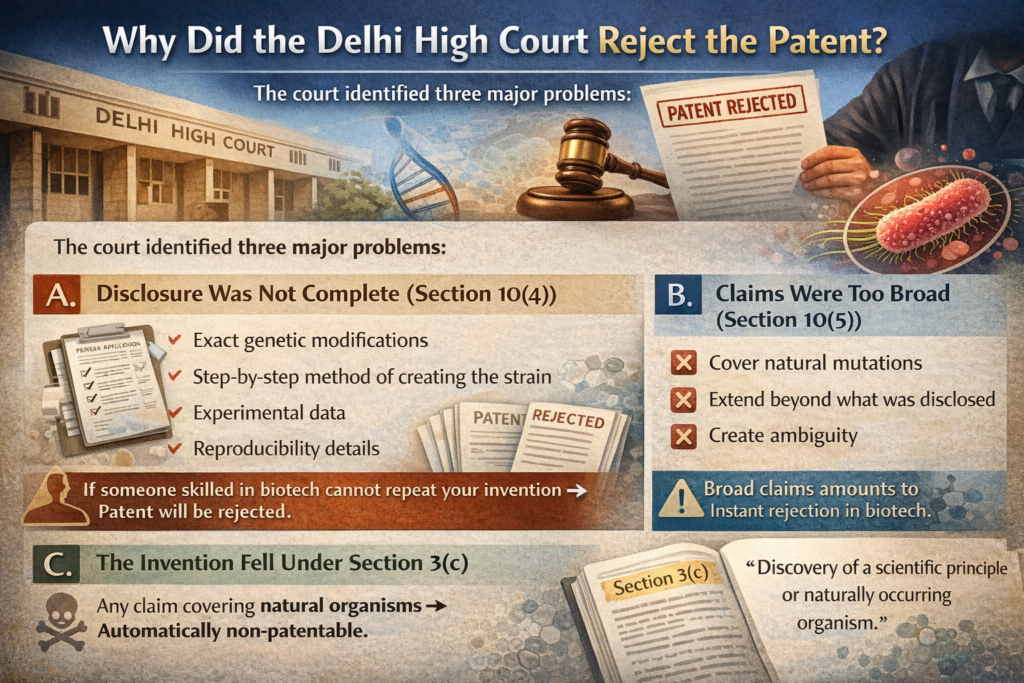
    The court identified three major problems:

     a. Disclosure Was Not Complete (Section 10(4))
    The patent application did not clearly disclose:

    • Exact genetic modifications
    • Step-by-step method of creating the strain
    • Experimental data
    • Reproducibility details

     If someone skilled in biotech cannot repeat your invention → Patent will be rejected.

     b. Claims Were Too Broad (Section 10(5))
    The claims were so broad that they could:

    • Cover natural mutations
    • Extend beyond what was disclosed
    • Create ambiguity

     Broad claims amounts to Instant rejection in biotech.

     C. The Invention Fell Under Section 3(c)
    Section 3(c) excludes:

    “Discovery of a scientific principle or naturally occurring organism.”

    Because the claims were broad enough to include natural Salmonella, the court applied Section 3(c).
     Any claim covering natural organisms → Automatically non-patentable.

     What Innovators & R&D Teams Should Learn from This Case
      Disclose the invention clearly and Completely:

    Since the India Patent law demands high scientific detail, not summaries and description.

    So, any patent application MUST include the dimensions and aspects:

    • Methodology
    • Lab protocols
    • Culture conditions
    • Experimental results
    • Genetic sequence information (in case of biotechnology particularly)
    • Deposit details (if needed in case biological material used for the work)

    Draft Claims Smartly (avoid boarder claims):

    Claims provide actual protection for the invention and claims are considered as legal boundaries of an invention.  So, it is necessary to draft claims in a smarter way as;

    Smart claims:

    • Match the description
    • Are precise
    • Highlight inventive steps

    A well-drafted claim directly proportional to Higher chance of grant.

     Understand India’s Section 3 of Indian Patent Act 1970 which are restrictions / non-patentable inventions
    Common rejection grounds:

    • Section 3(c) – natural organisms
    • Section 3(d) – known variants
    • Section 3(i) – diagnostic & therapeutic methods
    • Section 3(j) – plants, animals, seeds

    If your invention falls here → You need expert drafting to overcome objections.

      Impact on Biotech Startups & Researchers
    This judgment signals that:

    • India is open to biotech patents
    • BUT only when applications are drafted with precision and scientific depth

    For startups, researchers, and companies, the key considerations are as follows:

    • Needful preparation of detailed, high-quality patent specifications.
    • Need to work with experts who understand both science as well as patent law.
    •  Need to avoid broad, vague, or incomplete disclosures.

    How IIPTA uses case law for training
    At IIPTA (Indian Institute of Patent & Trademark), case law like he Regents of the University of California v. Controller of Patents .

    In understanding patent drafting,

    Section 3 compliance, and global patent trends.

    Hands-on practice with live biotech cases

    Conclusion: Strong Patents Create Opportunity—and Responsibility

    The case law Regents of the University of California v. Controller of Patents .

    For IP professionals, the real takeaway is this: patent grants are not endpoints. They are inflection points in a longer strategic journey where legal strength, commercial intent, and public interest synchronization is essential criteria needs to be taken in drafting stage itself .

    Those who understand this intersection build durable IP strategies. Those who do not merely collect certificates.

  • Inventive Step Alone Decides Patent Fate – Essential Learning for IP Professionals & Patent Agent Aspirants

    Inventive Step Alone Decides Patent Fate – Essential Learning for IP Professionals & Patent Agent Aspirants

    A Shocking Turn in Indian Patent Law by the Madras High Court

    Any invention either it is a product or process to become eligible to get patent must satisfy the following dimensions according to Indian Patent Law 1970 as follows, novelty or new invention, Inventive step and industrial application.

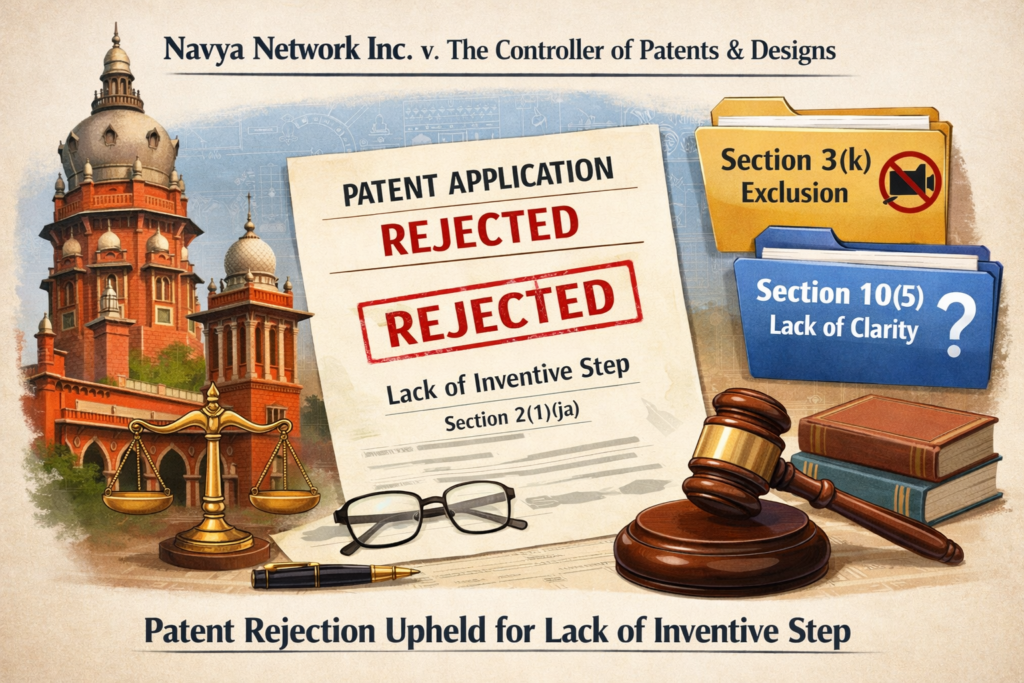
    In a recent judgment by the Madras High Court in the case of Navya Network Inc. v. The Controller of Patents & Designs. In this case, the court upheld the rejection of a patent application based solely on the lack of an inventive step under Section 2(1) (ja) of the Patents Act, 1970, without addressing other objections raised, such as exclusion under Section 3(k) and lack of clarity under Section 10(5).

    The ruling highlights need of comprehensive approach in in judicial proceedings, especially in specialized areas like patent law.

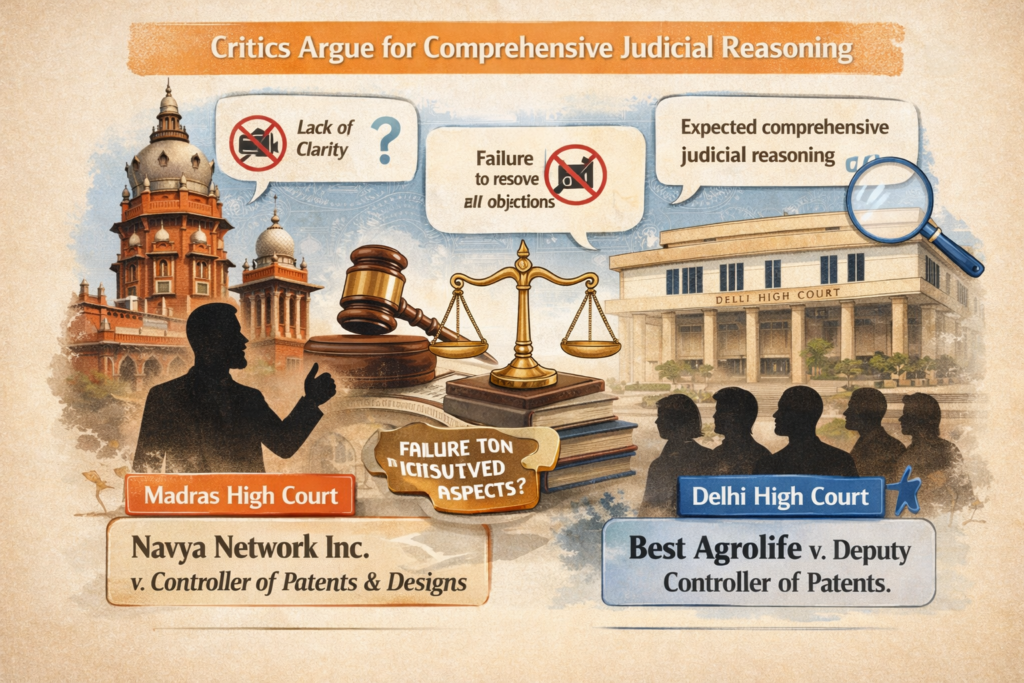
    The court’s decision to address only one ground of rejection, while ignoring others, raises concerns about the thoroughness of judicial review. This approach may lead to uncertainties for applicants, who remain uninformed about the court’s stance on other critical objections.​

    As per the Indian Patent Act, 1970

    Section 2 (1) (ja) “inventive step” means a feature of an invention that involves technical advance as compared to the existing knowledge or having economic significance or both and that makes the invention not obvious to a person skilled in the art;

    Section 3(k) under chapter II of the act describes “a mathematical or business method or a computer programme per se or algorithms;” is non- patentable invention

    Section 10 (5) The claim or claims of a complete specification shall relate to a single invention, or to a group of inventions linked so as to form a single inventive concept, shall be clear and succinct and shall be fairly based on the matter disclosed in the specification.

    As we all aware that claims are not just features of the invention, claims are legal boundaries. It is necessary for an applicant to mention the particular features as claim to get the legal protection.

    Concerns raised from ruling:

    Some of the critics are arguing through the stance that the ruling has discounted other core aspects which has been explicitly defined in the law. Here it has also been citing the judgement of Delhi High court stance in Best Agrolife v. Deputy Controller of Patents, where the failure to address all objections in a pre-grant opposition was deemed a violation of natural justice. Which underscores the expectation for comprehensive judicial reasoning.

    Efficient Justice Delivery is not only confined to Speedy disposal more than that comprehensive approach

    While the intent of ruling might be to expedite proceedings, such selective analysis could result in increased litigation. If applicants choose to refile or appeal based on unaddressed objections, it could burden the judicial system further, counteracting the goal of efficiency.​Which gives space or may be termed as ray of hope to further appeal in terms of reconsidering the decision or appeal to supreme court which are once again pile up of cases.

     Challenges on Judiciary:

    In 2021, the abolition of Intellectual Property Appellate Board (IPAB) and transferring the powers to High Court Jurisdiction is one- or other-way transferring burden to judiciary. Where IPAB as separate body with timely reforms could work efficiently, with expertise involvement with the consideration of all dimensions of the expertise IPR in general and Patents in particular.

    Implications on stakeholders:

    Patents act as both reward as well as protection for an inventor, judicial delay, non-comprehensive rulings are defeating the purpose of Innovation. The needful intervention of governance is through set of expertise body which addresses the scientific landscape according to the dynamics.

    This decision also has significant implications for startups and research teams. In a field where innovation moves quickly, patent protection plays a crucial role in attracting investment, commercializing technology, and protecting competitive advantages. However, drafting a successful patent application requires collaboration between researchers who understand the invention and patent professionals who understand the law. This partnership acts as precaution to avoid unwanted judicial litigation in course of patent filing procedure.

    What Innovators & R&D Teams Should Learn from This Case

    There is certain thing which should be taken as precautionary aspects before filing the patent application to carry out the process smoothly. The aspects which need support from the attorney are as follows

    Disclose the invention clearly and Completely: Since the India

    Patent law demands high scientific detail, not summaries and description.

    So, any patent application MUST include the dimensions and aspects:

    • Methodology
    • Lab protocols
    • Experimental results
    • Industrial application (in case of computer programme and algorithm)
    • Disclose the features completely

    .  Draft Claims Smartly (avoid boarder claims):

    Claims provide actual protection for the invention and claims are considered as legal boundaries of an invention.  So, it is necessary to draft claims in a smarter way as;

    Smart claims:

    • Match the description
    • Are precise
    • Highlight inventive steps

    A well-drafted claim directly proportional to Higher chance of grant.

    Understand India’s Section 3 Restrictions

    3(k) a mathematical or business method or a computer programme per se or algorithms;

    3(l) a literary, dramatic, musical or artistic work or any other aesthetic creation whatsoever including cinematographic works and television productions;

    3(m) a mere scheme or rule or method of performing mental act or method of playing game;

    3(n) a presentation of information; (o) topography of integrated circuits;

    Which needs expert guidance to overcome the chances grounds for rejection.

    Impact on Startups & Researchers:

    • BUT only when applications are drafted with precision and scientific depth

    For startups, researchers, and companies, the key considerations are as follows:

    • Needful preparation of detailed, high-quality patent specifications.
    • Need to work with experts who understand both science as well as patent law.
    •  Need to avoid broad, vague, or incomplete disclosures.

    To understand patent drafting, Section 3 and section 10 compliance in accordance to section 2 (1) (j) (a), and global patent trends.

    How IIPTA Uses Such Cases in Training
    At IIPTA (Indian Institute of Patent & Trademark), uses case laws like Navya Network Inc. v. The Controller of Patents & Designs to make innovators to be aware and bridge this gap to overcome objections in general and the provisions of

    Section 2(1) (ja)

    Section 3(k) and

    Section 10(5) in particular,

    and how to draft claims that are both enforceable and compliant with Indian law. Our programs are designed to give applicants the clarity, confidence and legal strategy needed to protect their inventions successfully.

    Conclusion : Drafting smarter claims in more important than broader claims

    This case not only shows judicial burden but also responsibility of patent practitioner to draft the application in such a way it not only ensures the grant but also a defense in regarding the issues of opposition in future course of patent prosecution during the life of patents.

  • From Applications to Assets

    From Applications to Assets

    What India’s Patenting Trends Reveal in 2025

    India recently achieved a milestone of fourth largest economy in the world and third in Asia. The innovation landscape of India is expanding and innovators from budding level to entrepreneur, and from grass root level to metropolitan residents. This aspect is reflected through the number of patent filings.

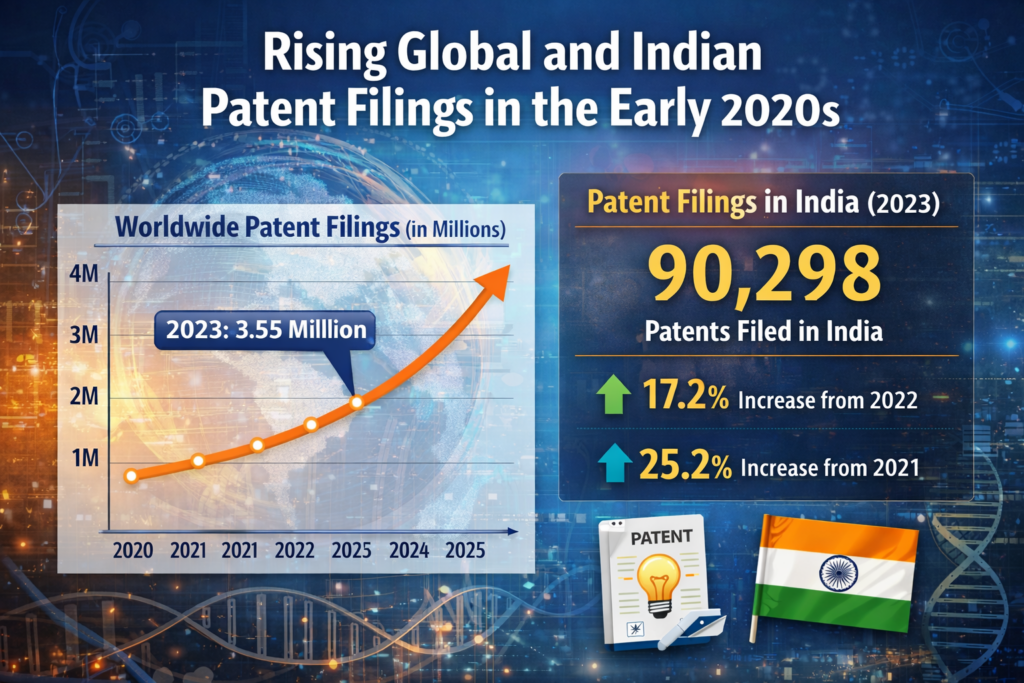
    In recent years generally in the decade of early 2020s the filing patents to protect the intellect in terms of scientific invention has amplified, which can be analyzed through shedding light on exponential trend in first half of the decade from 2020 to 2025 in general.

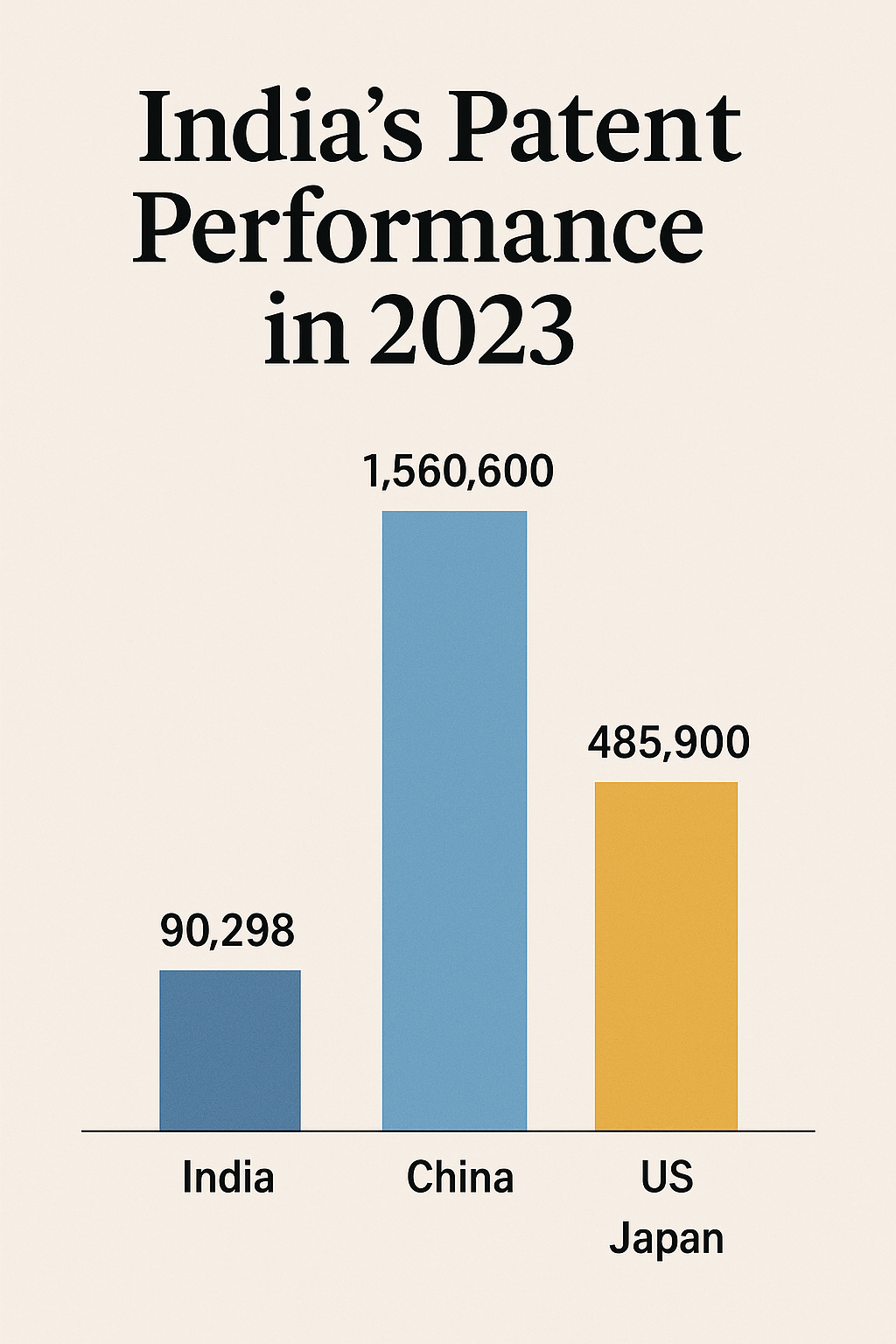
    The year 2023 has witnessed filing of 3.55 million across the global landscape. In Indian context the concerned office registered 90298 which is more than 17.2 percentage from 2022 and more than 25.2 percentage from the year 2021.

    One significant to take note of is 50 percent application among them are filed from the Indian residents which is the reflection widening domestic landscape innovation as well as invention.

    Despite these progress, India continues to lag behind those countries like China, the US, and Japan both in terms of absolute numbers, and applications filed and granted that are domestic in origin, which sheds light on the challenges in terms of, administrative inefficiencies, weaknesses in the domestic innovation ecosystem, the current status of patent filing in the country, capacities in patent boosting and performance, and inconsistencies across state-level patent incentives. A need of the hour for targeted reforms.

    An overview of the current trends in India’s patenting landscape (as of 2024–25):

    A. Rising Patent Filings

    • Steady growth: India has witnessed more than 90,000 patent filings annually (2022–23), compared to nearly 45,000 a decade ago.
    • Domestic vs. Foreign: Historically foreign applicants especially from US, Japan, China dominated filings, but domestic filings now account for more than 50% a major policy milestone.
    • Key drivers: Startups, academia–industry collaborations, and incentives under Atmanirbhar Bharat and the National IPR Policy (2016)

    B . Contribution from sectoral Trends

    Applications are filed from diversified landscape of industries :

    • Pharmaceuticals and Biotechnology showcasing as the strongest sector, with growth in biologics, biosimilars, and CRISPR-based applications.
    • ICT and Electronics: Surge in AI, IoT, semiconductor, and telecom-related patents, partly due to India’s semiconductor mission and 5G/6G R&D.
    • Green Technologies: Increase in filings for renewable energy, EV batteries, hydrogen, and waste-to-energy processes helped by “green patent” fast-tracking.
    • Agriculture and Food Technology : Amplified filings in biopesticides, climate-resilient crops, biofertilizers, and Agri-biotech innovations.

    C. Policy Push and Institutional Support :

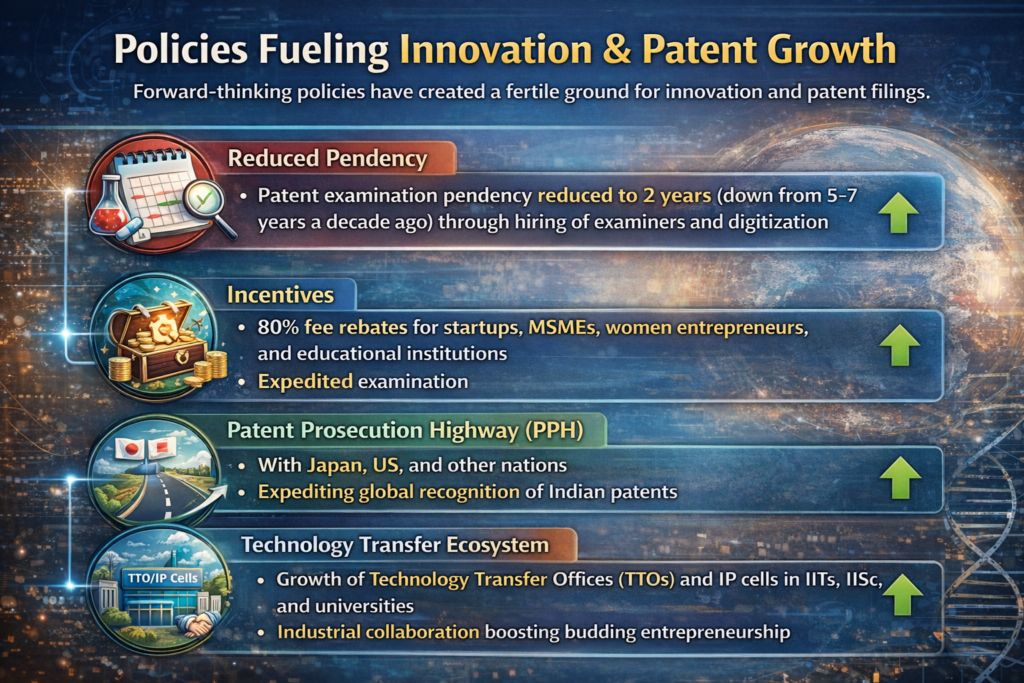
    As we aware of the reality that innovation blossoms when the environment is free and fertile, in terms of policy

    • Reduced Pendency: Patent examination pendency reduced to 2 years (down from 5–7 years a decade ago) through hiring of examiners and digitization
    • Incentives: 80% fee rebates for startups, MSMEs, women entrepreneurs, and educational institutions along with expedited examination.
    • Patent Prosecution Highway (PPH): With Japan, US, and other nations, expediting global recognition of Indian patents.
    • Technology Transfer Ecosystem: Growth of Technology Transfer Offices (TTOs) and IP cells in IITs, IISc, and universities as well as industrial collaboration as boost to budding entrepreneurship.

    D. Qualitative Shifts

    • From Filing to Commercialization: More focus on patent valuation, licensing, and monetization, not just on numbers but patented inventions serving the need of the society.
    • IP as Collateral: Banks and Venture Capitals beginning to recognize patents as intangible assets for financing.
    • Startup-Centric IP Culture: Startups are filing patents early to secure funding, often in areas like AI-driven platforms, medtech, and climate tech.
    • Digital Tools: AI-based prior art searches, e-filing, and automated examination workflows adopted by IPO (Indian Patent Office).

    E. Global Integration

    • India in WIPO Rankings: India entered the top 40 of the Global Innovation Index (GII 2023), driven by patent activity.
    • PCT (Patent Cooperation Treaty): Indian entities are filing more international patents, but still lag behind China, US, Korea.
    • Cross-Border Licensing: Pharma and IT sectors increasingly use patents for global licensing and collaborations.

    F. Challenges

    • Awareness Gaps: Many MSMEs and universities underutilize IP protections.
    • Patent Quality vs. Quantity: Concerns remain that filings are increasing, but enforceable, globally competitive patents are fewer.
    • Litigation & Enforcement: Patent litigation remains slow and costly, deterring smaller players.
    • CRI (Computer-Related Inventions): Ambiguity around software patents continues despite evolving jurisprudence.

    G. Future Outlook

    • AI & Data-Driven Patents: Surge expected in AI, machine learning, quantum computing, and blockchain-based filings.
    • Sustainability Focus: Policy push for green tech patents in EVs, solar, hydrogen, and bio-based plastics.
    • Regional Innovation Hubs: Growth beyond metros (Ahmedabad, Hyderabad, Pune, Coimbatore, and Bhubaneswar emerging as IP-active clusters).
    • IP–Startup Nexus: Patents will increasingly serve as fundraising and valuation tools for Indian startups seeking global expansion.

    Conclusion :

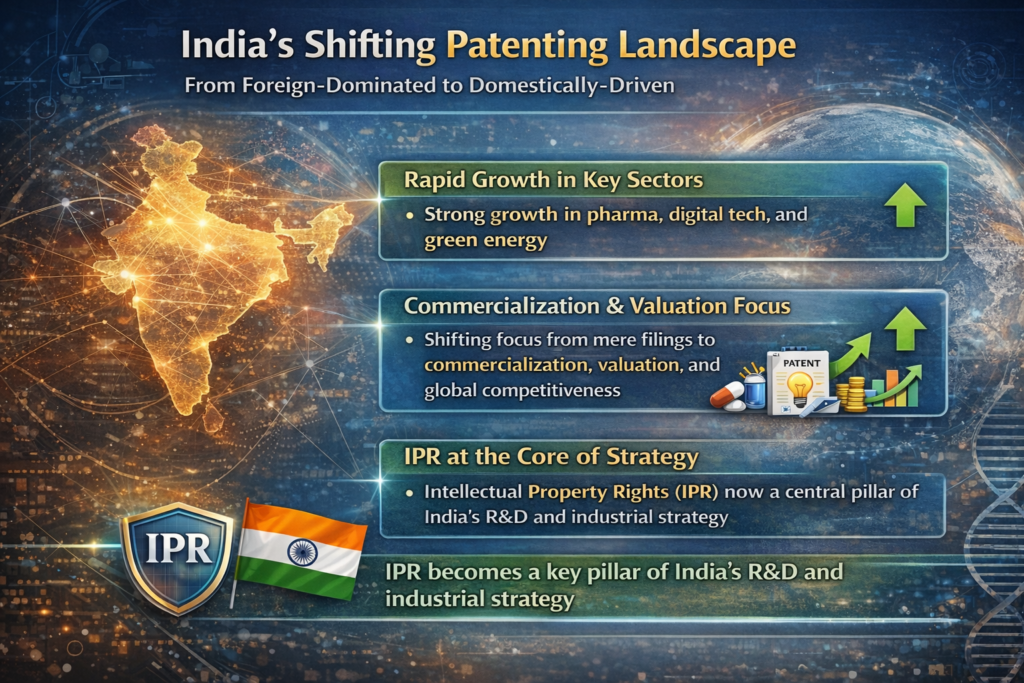
    India’s patenting landscape is transitioning from being foreign-dominated to domestically driven, with strong growth in pharma, digital tech, and green energy. The focus is shifting from mere filings to commercialization, valuation, and global competitiveness, making IPR a central pillar of India’s R&D and industrial strategy.

    Role of IIPTA in guiding the stake holders to reap the benefits of current trends in terms of career :

    As we understood from the news the landscape of innovation is widening which demands the expertise, the demand of the need of the hour is addressed by training aspirants

    Through Technical skills in terms

    Prior Art Analysis

    Patentability analysis

    Drafting Skills

    Updating of law in terms of amendments.

  • Patent Enforcement Gets Real

    Patent Enforcement Gets Real

    Inside the $117M Verdict Against Samsung

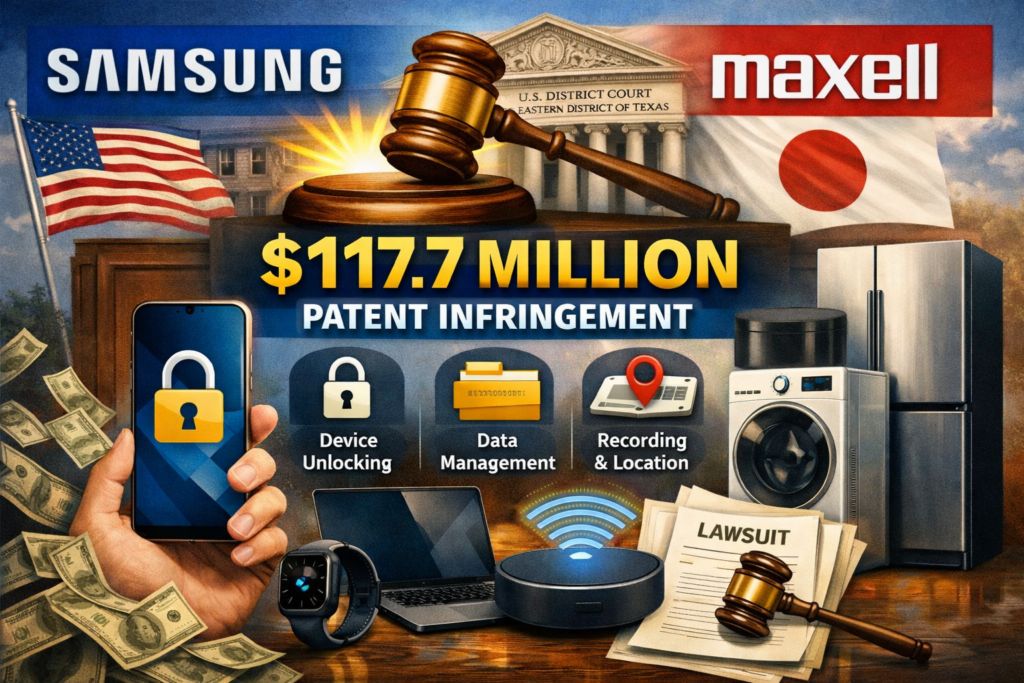
    Samsung Electronics has been ordered by a U.S. federal jury to pay approximately $117.7 million in damages to Japanese electronics firm Maxell Ltd. for infringing on three of its patents. The verdict, delivered in the U.S. District Court for the Eastern District of Texas, found that Samsung willfully infringed patents related to features such as

    Unlocking devices,

    Managing digital data,

    Locating recordings—technologies integral to Samsung’s Galaxy smartphones and tablets.

    The present suit was initiated in September 2023 , here Maxell alleged Samsung for violating its rights of seven patents by selling a variety of products, including the SmartThings station alongside smartphones, laptops and home appliances all using Maxell’s patented tech.

    Issue of Licensing :

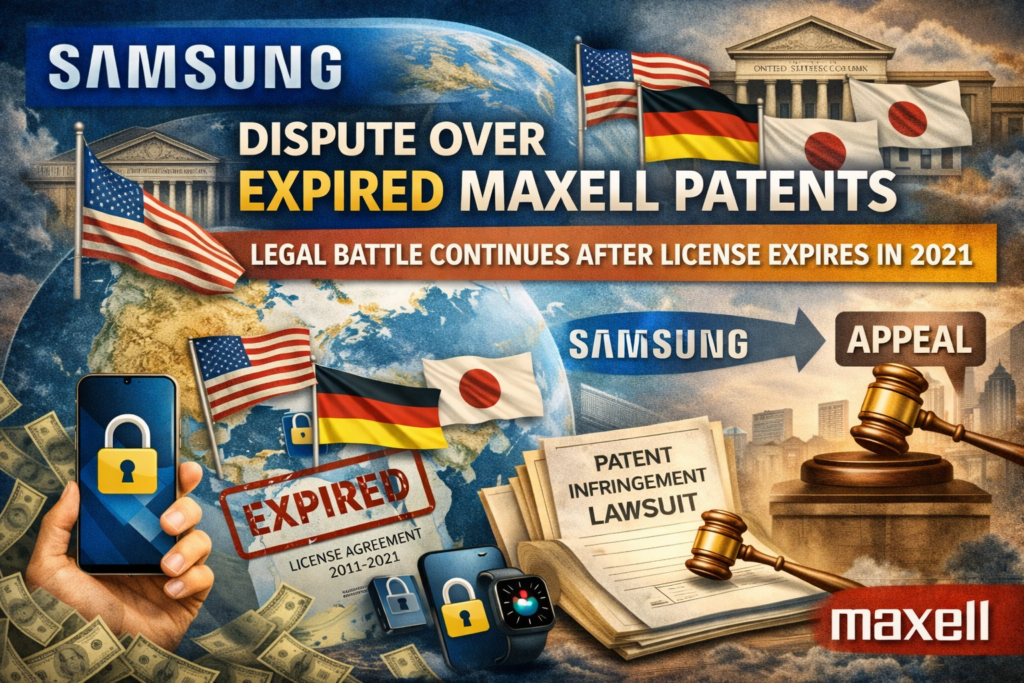
    Maxell’s patents are licensed by the Samsung for the duration of ten years since 2011. Despite of expiry of the term in 2021 with out renegotiation , Samsung continued using the patented tech without renegotiating its license with Maxell. The Japanese company then filed legal complaints across several district courts across the U.S, Germany and Japan.

    Samsung has option to file appeal against the current district court decision in higher court, and is expected to do so, which means this legal battle is far from over.

    Roots of Dispute are found in Licensing Agreement :

    The roots of dispute derives from licensing agreement which has established between Samsung and Hitachi Consumer Electronics in 2011, which expired in 2021.

    In 2013 Maxell, having acquired Hitachi Consumer Electronics and, attempted to renew the licensing agreement post-expiration. However, Samsung continued to utilize the patented technologies without a new agreement, leading Maxell to initiate legal action in multiple jurisdictions, including the United States, Germany, and Japan.

    This case is part of a broader pattern of patent infringement lawsuits against Samsung. In April 2025, a separate jury in Texas ordered Samsung to pay $278.7 million to Headwater Research LLC for infringing on wireless communication patents.

    While the $117.7 million judgment represents a fraction of Samsung’s annual revenue, it underscores the importance of adhering to intellectual property laws and the potential financial and reputational risks of infringement.

    What it means for Samsung as defendant in terms of risks and responses

    a) financial impact & damages

    • The judgment is a material hit, though for a giant like Samsung it is not catastrophic. But if the infringement is judged to be willful, the court could treble the damages under U.S. patent law. In many such cases, plaintiffs seek “enhanced damages” for willful infringement.
    • Samsung may also face ongoing royalty obligations, or be compelled to license the technology under negotiated terms going forward.
    • Samsung is likely to appeal, which can delay enforcement, but uncertainty during the appellate process can affect investor confidence, partner negotiations, and product planning.

    b) Operational & strategic risks

    • Design-around pressure: Samsung may need to rework certain hardware/firmware/software modules to avoid further infringement, which can raise costs or delay product launches.
    • Licensing burden: If multiple patent holders assert claims, Samsung might face a “royalty stacking” problem — many overlapping IPR claims each demanding fees.
    • Precedent and leverage: Patent owners may see this as evidence that large incumbents can be beaten. It might embolden more lawsuits from non-practicing entities (NPEs) or firms holding “sleeping patents.”
    • Reputational and contractual risk: Suppliers, OEM partners, or component vendors might demand indemnities or clarity on Samsung’s patent exposure in future collaborations.

    c) Legal manoeuvres Samsung is likely to employ

    • Appeal / motions for new trial / reduction of award: Samsung can attack the jury verdict, challenge claim construction, argue for patent invalidation (e.g., under 35 U.S.C. § 101, § 102/103) or non-infringement.
    • Post-grant proceedings & reexaminations: Samsung might ask the U.S. Patent and Trademark Office (USPTO) to reexamine or invalidate the asserted patents (Inter Partes Review, Post Grant Review) to undercut enforceability.
    • Settlement / licensing negotiations: If risk of continued exposure is high, Samsung may prefer to settle or negotiate cross-licenses to pull the uncertainty off the table.
    • Injunction defense / stay requests: Samsung might resist injunctions or ask a court to stay enforcement pending appeal or reexamination.

    Broader implications in the IPR and tech ecosystem

    • Software / hardware patent overlap: Many “smart device” patents lie in the confluence of software, firmware, and hardware. Courts are still navigating the fine lines of patentable subject matter especially in the U.S.
    • Patent assertion strategies: This case continues a trend where firms with relatively small product businesses (or NPEs) assert valuable, foundational patents against giants.
    • Territorial ripple effects: Even though this is a U.S. judgment, Samsung’s global operations may trigger parallel suits in jurisdictions like Korea, Europe, China, or India. Courts may look at the U.S. ruling as persuasive or influential.
    • Stricter validity standards: With growing scrutiny on abstract patents, obviousness, prior art, or eligibility, courts and patent offices are becoming more aggressive in invalidating weak or overly broad patents.
    • Technology stacking: As devices integrate more delegated functionalities (AI, data processing, connectivity), the risk of unwitting infringement increases. Firms must maintain better patent landscaping and freedom-to-operate (FTO) studies.

    Comparison to similar recent patent suits faced by Samsung and its outcome :

    • In Netlist vs. Samsung, a U.S. federal jury awarded $118 million to Netlist in 2024, over Samsung’s alleged infringement of patents related to memory modules used in high-performance computing.
    • In another case, Samsung was ordered to pay over $192 million for infringing wireless charging patents held by Mojo Mobility.
    • The accumulation of multiple large judgments suggests Samsung’s exposure in the U.S. patent arena is gradually deepening and may force shift in its IP strategy.

    Way forward for Amicable Solution between both parties

    a. Appeals and injunctions — whether Samsung succeeds in reducing or overturning the judgment, or delays consequences via appellate courts.

    b. Licensing or settlement deals — Samsung can renegotiate with new licenses with Maxell or acquires rights rather than fight continuing litigation.

    c. Parallel or follow-on suits — whether other entities assert patents against Samsung-informed by this success.

    d. Invalidation from Patent office whether the asserted patents get invalidated or narrowed through USPTO proceedings or judicial opinions.

    e. Global enforcement — will Maxell (or similar patent plaintiffs) attempt to enforce in other jurisdictions against Samsung’s global product sales.

    How IIPTA uses this case to train career aspirants of IP ?

    From the above case it has been understood its not just the market or consumer landscape more than that an FTO landscape interms of IPR language which emphasizes the

    Rights of Patentee which is Section 48 and under Indian Patent Act.

    Not only renewal of Patent but also renewal of licensing agreements which secures as well as widens the FTO landscape.