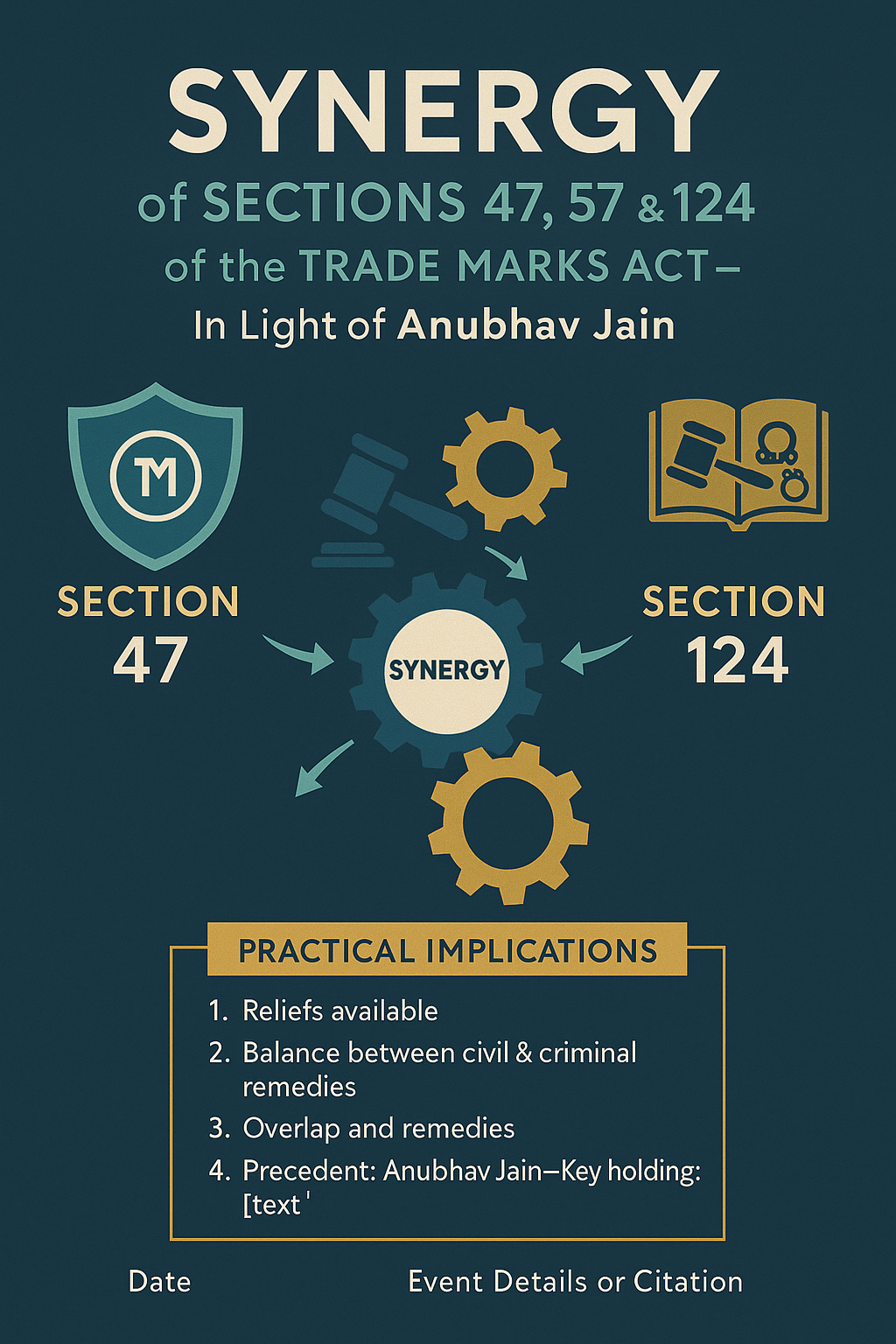
The Hidden Synergy of Sections 47, 57 & 124 Uncovered in the Anubhav Jain Case”
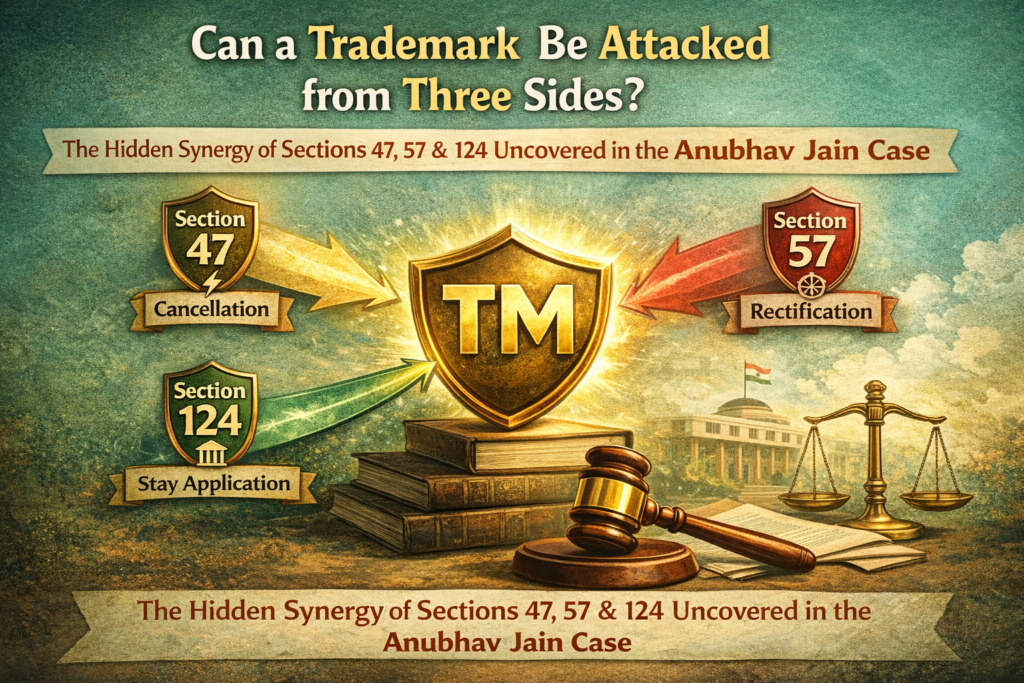
Introduction
Indian trademark law provides multiple statutory mechanisms to challenge the validity of a registered trademark. However, when rectification proceedings intersect with infringement suits, procedural complexity arises.
The Anubhav Jain case serves as a critical judicial lens to understand the interplay and synergy between:
- Section 47 (removal for non-use), of the Act provides for the removal of a registered trademark from the Register and imposition of limitations on grounds of non-use. A cancellation may also be filed on the grounds of mala fide registration, or wrongly remaining on the Register.
This provision prevents trademark hoarding and ensures the register reflects commercial reality.
- Section 57 (rectification of the register), and gives power to the Registrar or High Court to cancel or vary registrations and to rectify the Register. On application made in the prescribed manner to the High Court or to the Registrar, by any person aggrieved, the authority may make such order as it may think fit for cancelling or varying the registration of a trademark on the ground of any contravention or failure to observe a stipulated condition.
Importantly, Section 47 is a subset of Section 57, since non-use rectification is pursued procedurally under Section 57.
- Section 124 (stay of infringement suits pending rectification); Section 124 of the Trademarks Act specifically deal with the infringement suit. It applies only where there is, to begin with, a suit, alleging infringement of trademark pending before a Civil Court, and for the rectification of the register, the applicant has to approach the High Court however, the issue of invalided by the Civil Court.
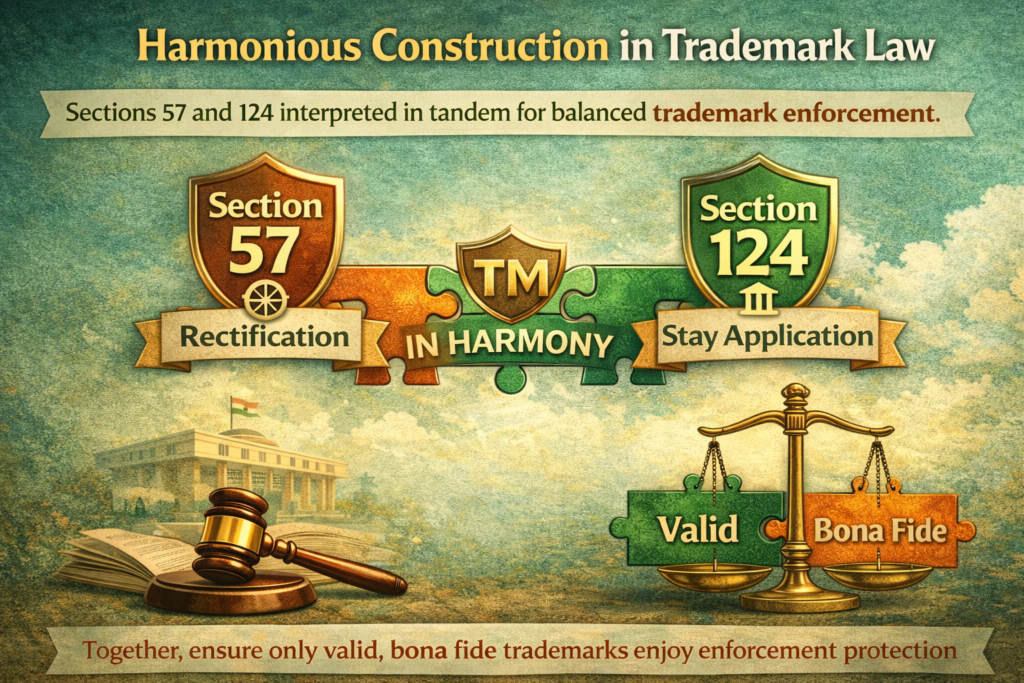
The High Court has followed the principle of harmonious construction in the impugned case while interpreting Section 57 and Section124 of the Act stated that they are not in derogation of each other, however; they exist in harmony with each other.
Together, these provisions aim to ensure that only valid and bona fide trademarks enjoy enforcement protection.
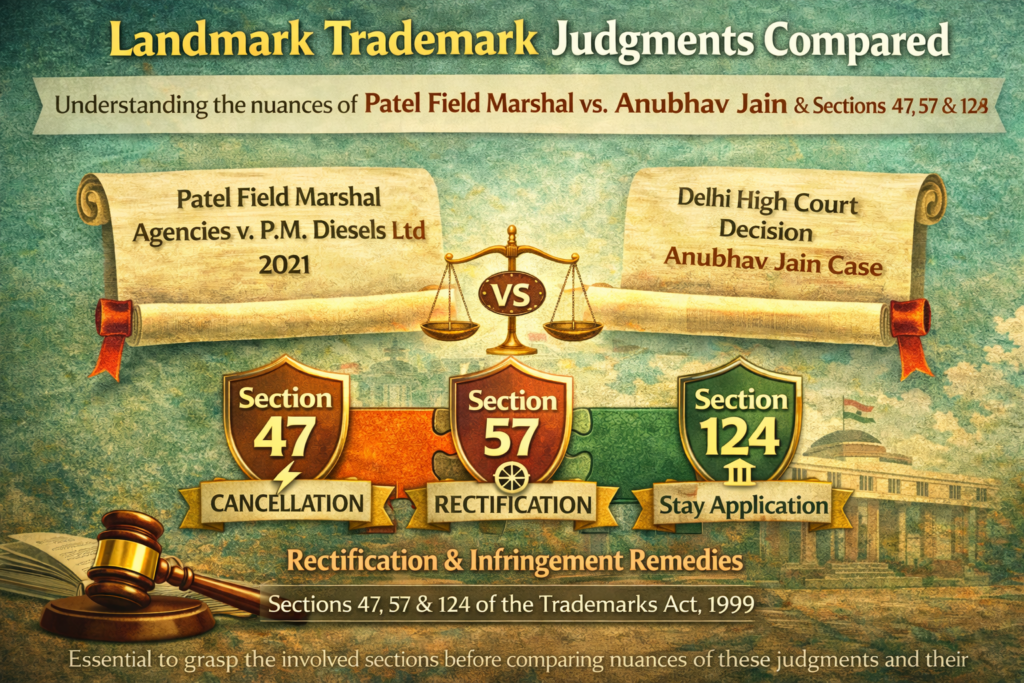
The landmark judgment Patel Field Marshal Agencies v. P.M. Diesels Ltd which was decided in 2021 by the Hon’ble Supreme Court, laid down the process followed in the rectification pleadings and as well rested the anomalies concerning the issue of invalidity and the recourse available remedies S.47, S.57 and S. 124 of the Trademarks Act,1999 in an infringement suit. The Delhi High Court decision in Anubhav Jain’s case was prima facie which is contrary to the Field Marshal case,
It is important to ponder about the nuances of both the judgments and how Anubhav Jain’s case can be beneficial in the practical light in the current scenario. Before that, it is essential to understand the sections involved in these judgments.
It lays down framework that in an infringement suit wherein the Plea of Invalidity is raised either by the Defendant or the Plaintiff against the registered trademark then the court shall abide by the following procedure which is as follows-
The Court trying the suit shall-
- When the plea for rectification is pending- If the rectification proceedings are pending before the Registrar or High Court and the infringement suit is instituted afterward, then a such suit is to be stayed till the final disposal of the rectification proceedings. (S. 124(1)(b)(i));
- Rectification proceedings not pending– When no such proceeding is pending at the time of institution of the suit, on prima satisfaction/tenability of the plea of invalidity of the plaintiff’s or the defendant’s trademark, the court may frame an issue regarding the same and adjourn the suit for three months to enable the party concerned to apply to Registrar or High Court for rectification of the trademark.
Case law of PATEL FIELD MARSHAL AGENCIES v. P.M. DIESELS LTD
The Court held that: “all questions concerning the validity of a Trade Mark is required to be decided by the Registrar or the High Court and not by the Civil Court. The decisions will bind the Civil Court. In a case where the issue of invalidity is raised or arises independent of a suit, the prescribed statutory authority will be the sole authority to deal with the matter. However, in a situation where a suit is pending (whether instituted before or after the filing of a rectification application), the exercise of jurisdiction by the prescribed statutory authority is contingent on a finding of the Civil Court as regards the prima facie tenability of the plea of invalidity.”
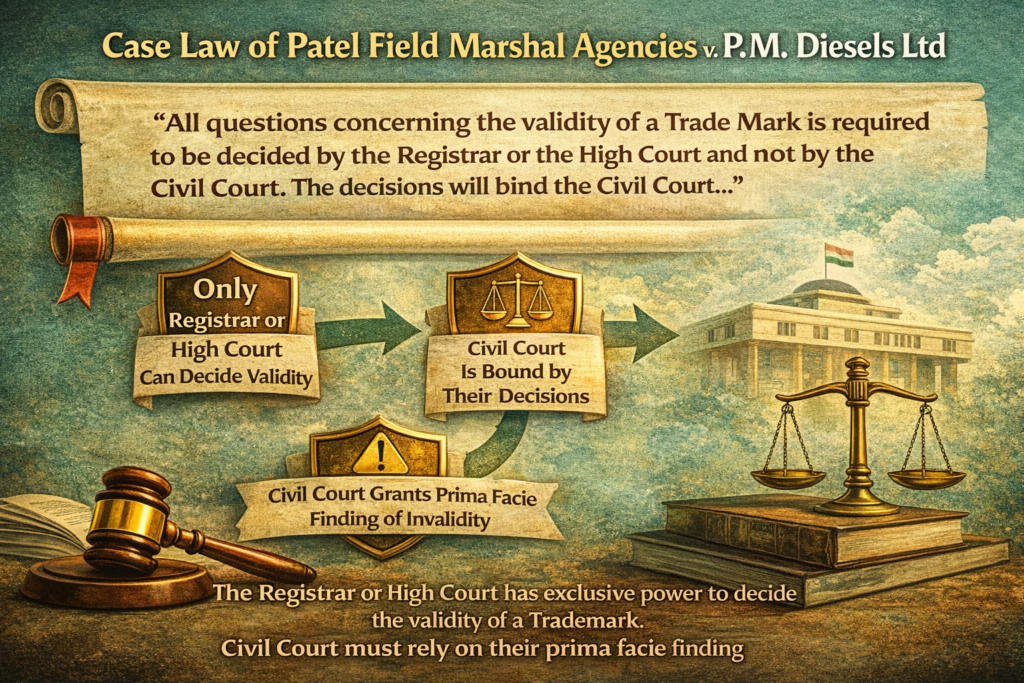
Both of these judgments deal with two very different scenarios but not contrary to one another.
While analyzing the practical dimensions of the Anubhav Jain case the view tends to give a more remedies to the aggrieved party. When the proceedings are pending before the High Court or Registrar for the rectification and in Civil court for the infringement.
WHY THIS CASE IS IMPORTANT FOR IP STUDENTS AND PRACTITIONERS
For students preparing for Trademark Agent and Patent Agent Examinations, this case provides a practical demonstration of:
• Trademark infringement and passing off
• Judicial standards for ex‑parte injunctions
• Role of intermediaries in modern IP enforcement
For practitioners, the case reinforces that trademark litigation today requires legal strategy aligned with technology and speed.
KEY TAKEAWAYS
- Usage of trademarks and imposition of limitations on grounds of non-use.
- Role of authority in cancelling or varying the registration of a trademark on the ground of any contravention or failure to observe a stipulated condition.
- the rectification of the register, the room for applicant to approach the High Court
Conclusion :
The synergy between Sections 47, 57, and 124 reflects a carefully balanced legislative design—one that promotes commercial honesty, procedural efficiency, and judicial discipline. The Anubhav Jain case stands as a guiding precedent ensuring that trademark enforcement does not shield dormant or improperly registered marks, while simultaneously protecting courts from dilatory tactics.
Leave a Reply