
Introduction: Why CRIs Remain the Most Misunderstood Patent Category in India
Computer-Related Inventions (CRIs) occupy the most contentious space in Indian patent law. Despite technological sophistication and commercial relevance, a significant number of CRI applications fail—not due to lack of innovation, but due to how the invention is positioned before the Indian Patent Office.
This article examines the real obstacles in securing IPR for CRIs in India and, more importantly, the strategies that consistently work in practice.
Legal Framework & Patentability Hurdles
The Statutory Barrier
Section 3(k) of the Indian Patents Act, 1970 excludes:
“a mathematical or business method or a computer program per se or algorithms”
In practice, this provision is often interpreted conservatively, leading to mechanical rejections of software-centric inventions.
The Real Problem
The issue is not Section 3(k) itself—but drafting that fails to demonstrate technical contribution.
What Actually Works
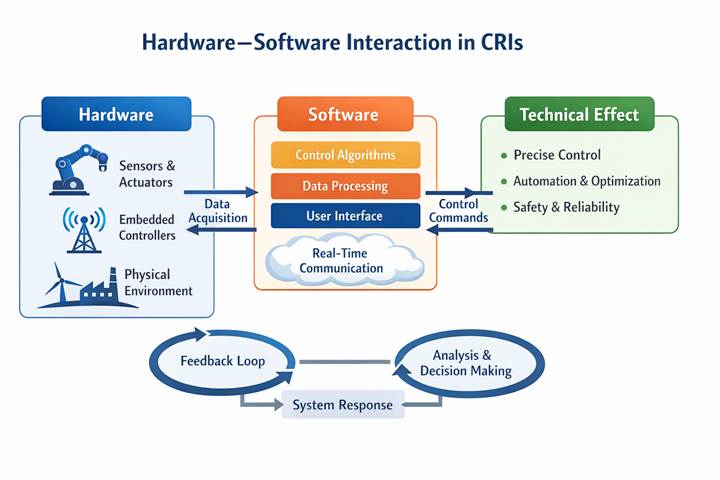
- Demonstrating technical effect (speed, efficiency, security, resource optimization)
- Showing hardware integration or industrial application
- Avoiding claims that isolate software logic
Examples that have succeeded include:
- AI-based diagnostic systems
- IoT-driven control architectures
- Blockchain-based secure transaction platforms
Drafting & Specification Strategies That Survive Examination
One of the most frequent causes of CRI rejection is algorithm-centric claim drafting.
Drafting Approaches That Work:
- Use a problem–solution framework
- Include system and apparatus claims
- Clearly explain data flow, processing steps, and hardware interaction
Professional Tip
Always align the specification with the Guidelines for Examination of CRIs (2017; updated 2023). These guidelines are not optional reading—they are examination reality.
Examination Delays & Inconsistent Interpretation
CRI examination often varies significantly between controllers, particularly in domains such as:
- Artificial Intelligence
- Machine Learning
- Blockchain
- Quantum computing
Practical Strategies:
- Proactive participation in hearings
- Use of technical diagrams
- Filing pre-hearing submissions to explain technical effect
Education of the examiner is often part of CRI prosecution.
Global Alignment and Comparative Filings
India’s approach to CRIs remains more conservative than jurisdictions such as the USPTO or EPO. However, foreign prosecution can be strategically leveraged.
Effective Tools:
- PCT filings
- Positive International Search Reports (ISRs)
- Foreign grants submitted under Section 8
These act as credibility anchors during Indian examination.
Lack of Clarity in AI, ML & Emerging Technologies
The absence of specific AI legislation creates uncertainty for patent applicants. In such cases, hybrid IP strategies often offer stronger protection.
Alternative IP Routes:
- Copyright: Source code, UI/UX
- Trade Secrets: Algorithms, models
- Design Protection: GUIs
- Trademarks: Platform branding
Strategic IP planning is critical in fast-moving tech sectors.

Key Takeaways
- CRIs are not automatically non-patentable in India
- Technical effect is the decisive factor
- Drafting quality determines prosecution outcome
- Foreign filings strengthen Indian prosecution
- Combining IP rights offers durable protection
Conclusion
Securing IPR for Computer-Related Inventions in India requires more than technical brilliance it demands strategic drafting, informed prosecution, and legal-technical alignment.
When approached correctly, the Indian patent system does offer meaningful protection for CRIs. The difference lies in understanding how innovation must be translated into patent language.
At IIPTA, CRIs are taught not as exclusions but as strategic patenting challenges.